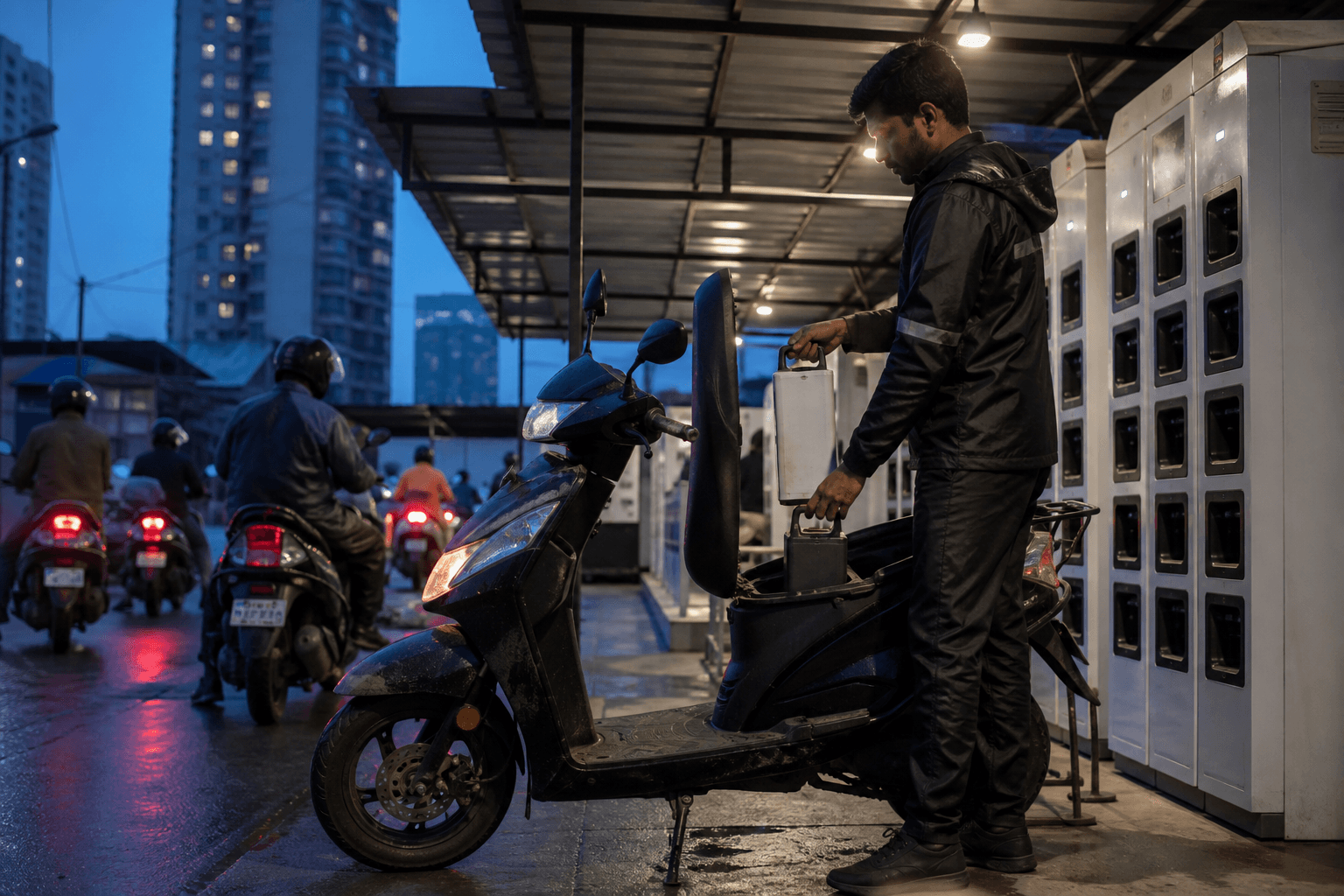
Battery swapping has spent years being pitched as the future of every electric vehicle. That was the wrong argument. Its strongest market is narrower and much more practical: vehicles that lose money every minute they sit still.
Magna International is putting another $35 million into Yuma Energy, the Indian battery-swapping company it formed with electric-mobility operator Yulu. Yuma managing director Muthu Subramanian told TechCrunch that the fresh capital will fund more stations and help double a fleet of about 100,000 batteries over the next 12 to 18 months. The company says it has completed more than 60 million swaps across more than 400 locations in 18 cities.
The economics are built around two- and three-wheelers used for delivery and other high-mileage work. A rider can exchange a battery in under two minutes. Even a 20-minute fast charge removes the vehicle from service, consumes scarce curb space, and asks the grid to deliver more power at once. In a gig economy, uptime is not a convenience metric. It is revenue.
This is still an infrastructure business, which means the easy part is drawing the network map. Yuma has to buy batteries and build charging capacity before demand fully arrives. Subramanian said the company is not yet profitable, although some mature stations are EBITDA-positive, and that it is targeting companywide EBITDA break-even within two quarters. Those are management targets, not completed results.
The strategic advantage is vertical control. Yuma designs and manufactures its battery packs and charging units, then operates the network that manages them. That can improve utilization and reliability, but it also concentrates execution risk. A weak battery standard, poor station maintenance, or lopsided fleet dependence can wreck the model quickly.
The lesson is not that everyone should swap batteries. It is that infrastructure wins when it is designed around the economic rhythm of the customer. For a commuter, charging overnight may be fine. For a delivery rider, the battery is inventory and idle time is the tax.
LaunchPad positionBattery swapping is not a universal replacement for charging. It becomes compelling where vehicles run long shifts, minutes translate directly into earnings, and one operator can standardize the battery, hardware, and service network.
This report draws on the linked primary sources and reputable reporting. Company statements are treated as claims until independently demonstrated.