Humanoid robotics has spent years borrowing credibility from demos. XPENG is now borrowing something more useful: 900 million dollars.
The Chinese electric vehicle maker signed share purchase agreements for the first external financing round of XPENG Robotics. The company says the round exceeds 900 million dollars and values the subsidiary above 6.3 billion dollars after the investment. IDG Capital and Gaorong Ventures led the deal, with strategic support from investors connected to Tencent and Alibaba. Regulatory filings say XPENG will retain control and continue consolidating the unit in its financial statements.
The structure matters. This is not a small internal research program receiving another budget line. It is a separately capitalized business with outside investors, its own valuation, and an explicit mandate to commercialize embodied AI. XPENG gets fresh capital without surrendering control, while the robotics unit gets a financial identity that can recruit, partner, and potentially raise again.
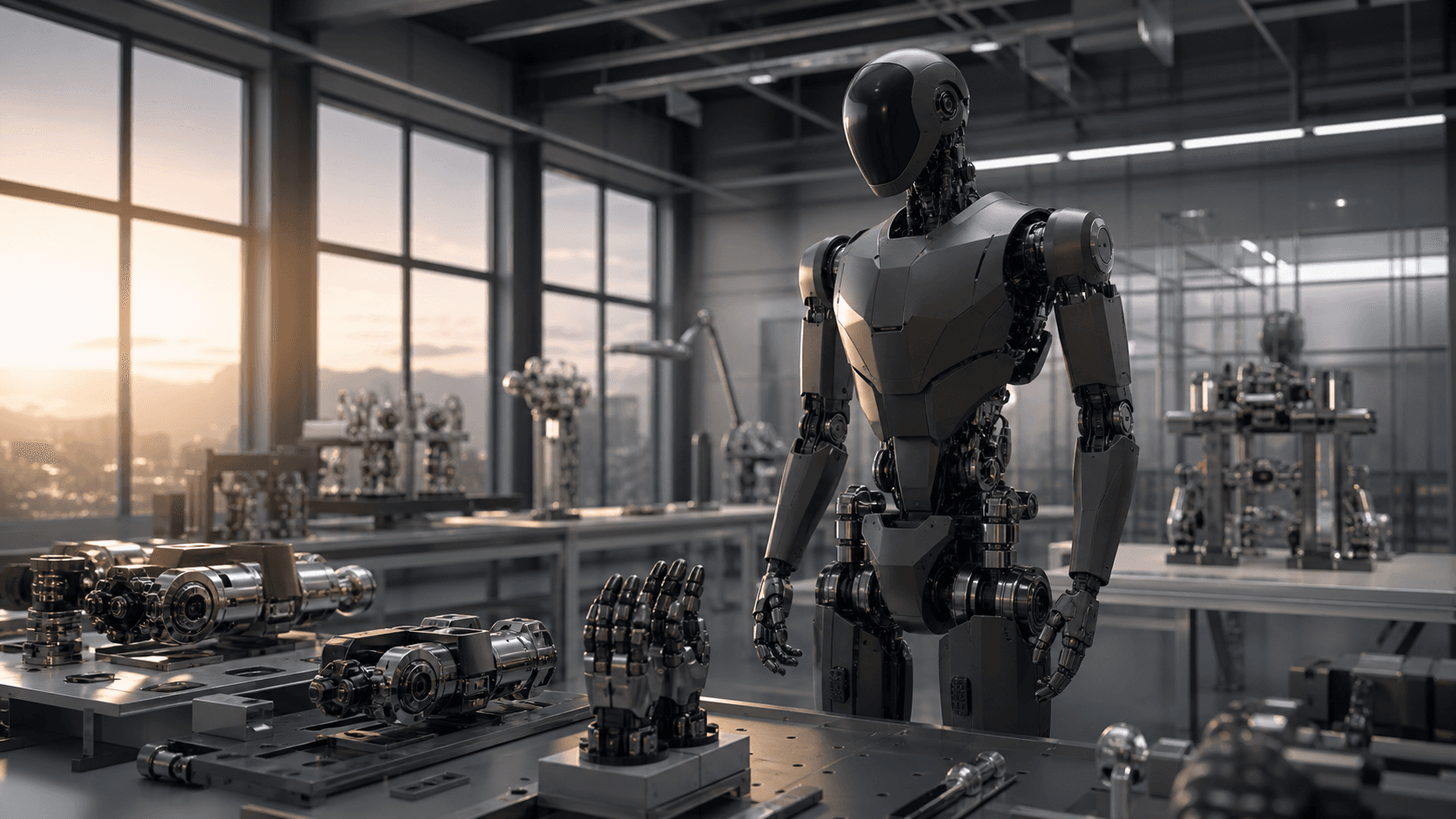
The company is attaching aggressive technical claims and timelines to that capital. XPENG says its IRON humanoid has 76 degrees of freedom, 21 in each hand, and three in-house Turing chips delivering a combined 2,250 TOPS. It is targeting mass production by the end of 2026, initial commercial deployments in retail and campus environments, and broader deliveries in China and overseas during 2027.
Those are company targets, not completed milestones. Degrees of freedom describe possible movement, not useful work. TOPS describe compute throughput under defined arithmetic, not reliable task completion. A robot becomes a business when it can perform a bounded job for less total cost than the alternatives, survive the environment, recover from failure, and earn the trust of operators who do not care how cinematic the launch video was.
XPENG does have leverage that pure robotics startups often lack. Vehicle manufacturing builds competence in supply chains, electric actuators, perception, embedded compute, quality systems, and large-scale assembly. The overlap is not complete, but it is real. The company also has physical environments where robots can be tested before they are sold into stranger workplaces.
Now the valuation has created a scoreboard. Watch unit cost, uptime, intervention rate, useful task hours, and the number of external customers paying for production deployments. The money says the market believes XPENG can build a robotics company. The factory floor gets the final vote.
LaunchPad positionThe round buys time, talent, and manufacturing capacity. The proof will be repeatable deployment economics, not impressive degrees of freedom or a large private valuation.
This report draws on the linked primary sources and reputable reporting. Company statements are treated as claims until independently demonstrated.