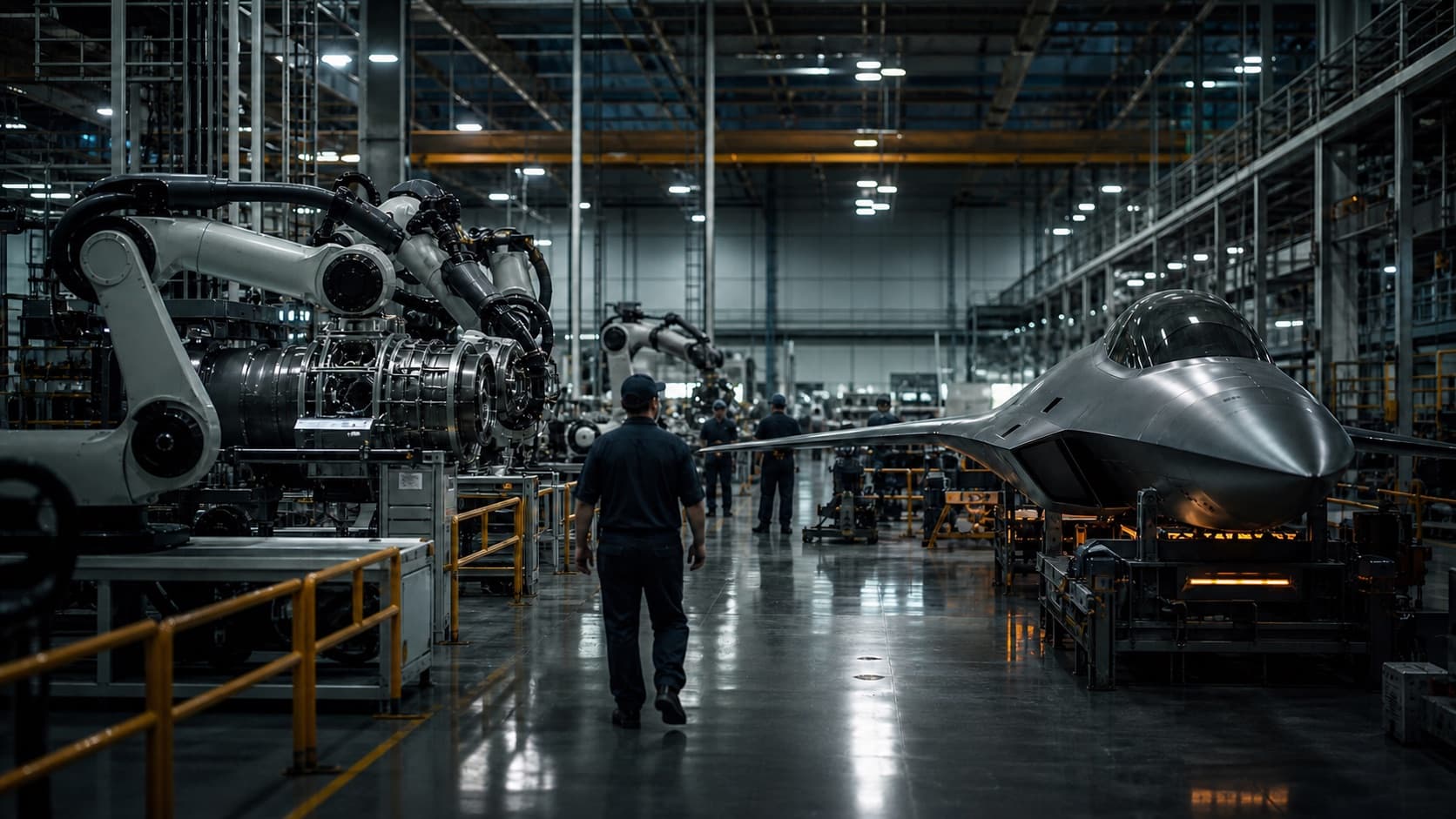
How watches, motorcycles, electric vehicles, drones, robotics, and artificial intelligence reveal China’s arrival on the world stage
There is a quiet little war happening on people’s wrists.
Most of the world has no idea it is taking place.
Ten years ago, buying an affordable mechanical watch meant accepting compromises. You expected a mineral crystal that would eventually scratch. You expected a stamped metal clasp. You expected a basic bracelet, an aluminum bezel, mediocre lume, and a movement that might gain or lose enough time each day to remind you that accuracy was apparently a luxury feature.
Then something changed.
Sapphire crystals started appearing on watches that cost a few hundred dollars. Ceramic bezels followed. Then came solid bracelets, milled clasps, titanium cases, applied indices, high-beat movements, mechanical chronographs, quick-release systems, and on-the-fly micro-adjustments.
At first, these features appeared one at a time.
Then Chinese watch companies started stacking them.
Suddenly, a watch costing $250 could arrive with a sapphire crystal, a ceramic bezel, a regulated automatic movement, a beautifully finished steel case, strong lume, a solid bracelet, and a clasp that was more functional than the one attached to a watch costing five times as much.
Companies such as San Martin, Sea-Gull, Sugess, Baltany, Seestern, Cronos, Addiesdive, and Watchdives did not just enter the affordable watch market.
They started an arms race inside it.
Every time one brand raised the standard, another answered. Better finishing. Better bracelets. Better movements. Better dials. Better materials. Better specifications.
The consumer won.
What had been considered impressive three years earlier became normal. What had once separated affordable watches from premium watches began showing up in products sold directly through AliExpress.
That does not mean a $300 Chinese watch is automatically better than a Swiss watch costing $3,000. It does not mean heritage is worthless, craftsmanship is imaginary, or every traditional watch brand is overcharging.
It does mean the old explanation for the price difference is getting harder to defend.
Because once the materials become comparable and the finishing gets close enough to make the comparison uncomfortable, buyers start asking a dangerous question.
What exactly am I paying for?
That question reaches far beyond watches.
In fact, the watch on your wrist may be one of the clearest signs that something much larger is happening.
China is no longer satisfied with being the factory behind the world’s brands.
The factory has become the competitor.
We Used to Think We Understood Chinese Products
For a long time, the phrase “Made in China” had a specific meaning in the American mind.
It meant inexpensive.
Sometimes it meant useful. Sometimes it meant disposable. Sometimes it meant a product you bought because you needed it immediately and did not want to spend much money.
It was the drill from Harbor Freight that you expected to use a few times.
It was the generic cable on Amazon.
It was the kitchen gadget, flashlight, toy, phone charger, or plastic accessory that appeared under fifty different brand names even though all fifty probably came from the same industrial district.
Western companies designed the products, owned the brands, controlled the customer relationship, and collected the largest margins.
China manufactured them.
That was the arrangement.
America and Europe kept the mythology. China handled the machinery.
Then the internet began removing the layers between the factory and the customer.
AliExpress gave consumers direct access to Chinese sellers. Amazon filled with Chinese private-label brands. Shein rewired fast fashion. Temu spent enough money introducing itself to American consumers that it became part of the cultural landscape almost overnight.
Temu advertising during the Super Bowl felt strange because it made something visible that had been building quietly for years.
China was no longer hiding inside the supply chain.
It wanted the customer.
That was the first major shift.
The next one was more important.
Chinese companies did not just want to sell the products. They wanted to design them, brand them, improve them, and eventually define the category itself.
That is the part many people still have not fully processed.
Seventy Years of Preparation
China’s rise did not happen because somebody discovered a secret method for making inexpensive electric cars.
This has been building for generations.
Modern China spent decades developing industrial capacity, educating engineers, expanding infrastructure, building ports, creating special economic zones, absorbing foreign manufacturing knowledge, and constructing supplier networks of almost unimaginable density.
When the United States and other Western nations outsourced manufacturing, they were not simply transferring factory jobs.
They were transferring repetition.
They were transferring experience.
They were transferring the constant, daily process of learning how physical things are actually made.
How to reduce defects.
How to redesign a component so it can be assembled faster.
How to replace five parts with three.
How to source materials at scale.
How to build specialized machinery.
How to train workers.
How to compress production time.
How to move from prototype to factory floor.
How to take a product apart, understand it, reproduce it, and eventually improve it.
No single factory learned all of this overnight. The capability accumulated over decades.
One supplier became ten. Ten became a district. A district became an ecosystem. Tooling companies appeared beside battery suppliers. Electronics manufacturers appeared beside motor producers. Packaging, logistics, software, testing, fabrication, and component businesses grew around them.
The West viewed much of this as low-level manufacturing.
China treated it as an education.
Now graduation day appears to be approaching.
CFMoto and the Motorcycle Nobody Expected
You can see the shift clearly in motorcycles.
For years, Chinese motorcycles were generally treated as disposable transportation. They were inexpensive, but the quality was inconsistent. Engines were rough. Components aged badly. Parts support could be uncertain. Resale value barely existed.
Mention a Chinese motorcycle to an experienced rider and the response was usually predictable.
Buy a used Japanese bike instead.
That advice was not irrational. Honda, Yamaha, Kawasaki, and Suzuki earned their reputations over decades. They built machines that survived neglect, abuse, bad weather, bad owners, and enormous mileage.
Then companies such as CFMoto started making the comparison more complicated.
Look at a modern CFMoto 450SS, 450MT, 675SS, or 800MT.
These motorcycles do not look like crude copies assembled from whatever parts happened to be available. They arrive with modern engines, sharp bodywork, TFT displays, ABS, traction control, ride modes, connectivity, adjustable components, and features that established manufacturers often reserve for more expensive models.
More importantly, they are becoming motorcycles people actually want.
Not merely motorcycles people tolerate because the price is low.
CFMoto’s relationship with KTM is also revealing. The two companies have operated through a manufacturing partnership and joint venture in China. CFMoto has gained experience producing motorcycles and engines connected to a respected European performance brand.
That is exactly how industrial capability develops.
First, you manufacture for someone else.
Then you learn.
Then you build your own.
Then your own product begins appearing beside theirs in the showroom.
CFMoto reportedly sold more than 250,000 motorcycles globally in 2025 after another year of growth. The company’s own international messaging said its European business grew rapidly in 2024.
The numbers matter, but the cultural shift matters more.
Riders are comparing CFMoto directly with Kawasaki, Yamaha, Honda, Suzuki, KTM, and Triumph.
That comparison would have sounded ridiculous not very long ago.
Now it happens every day.
There are still legitimate concerns. We do not yet have decades of evidence showing how these motorcycles will age. Dealer networks are not equally strong everywhere. Parts availability, warranty support, resale value, corrosion resistance, and long-term model support remain real questions.
But notice how the criticism has changed.
The argument is no longer that China cannot build a serious motorcycle.
The argument is whether the motorcycle will remain serious for fifteen years.
That is a massive step forward.
CFMoto is not alone either. QJMotor, Voge, Kove, Zontes, Benda, and other Chinese manufacturers are moving into international markets with increasingly ambitious machines.
This is starting to feel familiar.
Japan went through its own version of this story.
Japanese motorcycles were once dismissed by established Western manufacturers. Then they became reliable. Then fast. Then affordable and reliable. Then technologically advanced. Eventually, the companies that had laughed at them were either gone or trying desperately to catch up.
History never repeats perfectly.
But sometimes it rhymes loudly enough that you should pay attention.
China Did Not Just Build an Electric Car
The global electric vehicle story is often reduced to one company.
BYD.
But BYD is only the most visible part of something much larger.
China did not merely create an inexpensive electric car industry. It created an electric vehicle ecosystem.
It built battery factories, mineral refining capacity, cathode and anode production, electric motor suppliers, power electronics companies, charging infrastructure, vehicle software, component manufacturers, and an enormous domestic market capable of testing products at scale.
By 2025, China accounted for more than 80 percent of global battery-cell production. Chinese producers represented almost three quarters of global electric-car battery deployment.
Think about the scale of that for a moment.
The world is moving toward electric transportation, and a massive portion of the system that makes that movement possible runs through China.
BYD represents the full force of this strategy because it began as a battery company and expanded outward.
It controls many of the technologies that determine the cost and performance of an electric vehicle. Batteries. Motors. Power electronics. Vehicle platforms. Semiconductors. Manufacturing.
That integration allows BYD to compete differently.
It is not simply purchasing a battery from one company, a motor from another, electronics from a third, and paying several layers of suppliers before the car reaches the customer.
It owns more of the stack.
That is one reason it can place an extraordinary amount of technology inside vehicles at prices that force established automakers into uncomfortable conversations.
But BYD is only one part of the field.
Geely controls or influences an international collection of brands and platforms that includes Volvo, Polestar, Zeekr, and Lotus.
XPeng is pursuing intelligent driving and software.
Nio built its strategy around premium electric vehicles and battery swapping.
Zeekr is competing on charging, performance, and high-end electric platforms.
Then there is Xiaomi.
A company known for phones, televisions, wearables, appliances, and connected devices entered the automobile business and produced a car that immediately demanded attention.
That matters because Xiaomi does not view the car as an isolated mechanical product.
It sees the car as another intelligent device.
A large one, certainly. A dangerous one if engineered poorly. But still part of the same connected ecosystem as the phone, home, cloud account, entertainment, navigation, payments, and artificial intelligence.
Traditional automakers often struggle to become software companies.
Chinese technology companies are approaching the problem from the opposite direction.
They are software and electronics companies learning how to make cars.
That may prove to be a very powerful advantage.
DJI Already Showed Us What Comes Next
There is a point in every industrial rise when the new competitor stops being described as “good for the price.”
DJI passed that point years ago.
DJI did not conquer the civilian drone market by making a cheap imitation that was almost as good as the Western alternative.
It built the product that much of the world actually preferred.
The company integrated flight controls, cameras, gimbals, batteries, wireless transmission, sensors, software, mapping, and manufacturing into products that filmmakers, farmers, inspectors, emergency responders, surveyors, and hobbyists could operate.
DJI drones were not successful because they were Chinese.
They were successful because they worked.
That sounds obvious, but it represents a major change.
When governments began discussing restrictions against DJI, the problem was not simply finding another company that sold drones.
The problem was replacing an entire operating ecosystem.
People had trained on the products. Businesses had built workflows around them. Agencies had purchased accessories and batteries. Software had been integrated. Pilots knew the controls.
DJI had become infrastructure.
That is what category leadership looks like.
China was not copying the benchmark anymore.
China was the benchmark.
Huawei Refused to Disappear
Huawei is another company that does not fit comfortably inside the old story about Chinese technology.
The United States restricted Huawei’s access to advanced chips and American technology. Google services disappeared from its international phones. Its global smartphone business took a massive hit.
Many observers assumed the company would fade.
It did not.
Huawei continued building telecommunications equipment, networking technology, smartphones, wearables, cloud services, operating systems, chip designs, and automotive systems.
It developed HarmonyOS. It returned to competitive smartphones in China. It expanded its role in vehicle software and intelligent driving. It continued leading significant portions of the global telecom equipment market.
The restrictions absolutely caused damage. Huawei lost access to technologies and markets that mattered.
But its survival revealed something important.
China had already built enough technical depth to respond.
Not perfectly. Not immediately. Not without cost.
But it could respond.
It could redesign. Substitute. rebuild. Coordinate suppliers. Develop domestic alternatives. Move resources. Keep going.
That is the difference between a country that merely assembles technology and one that has begun constructing a technological system of its own.
Then DeepSeek Walked Into the Room
Artificial intelligence may be the most important part of this entire story.
For the first few years after ChatGPT arrived, the global AI race looked overwhelmingly American.
OpenAI, Google, Anthropic, Meta, Microsoft, Nvidia, and a collection of heavily funded startups appeared to control the frontier.
The models required enormous amounts of capital, data, computing infrastructure, and advanced chips. The assumption was that only a small group of American companies could afford to compete at the highest level.
Then DeepSeek walked into the room.
The impact was not simply that DeepSeek produced a strong model.
It challenged the assumptions surrounding the cost and exclusivity of frontier AI.
DeepSeek showed that system-level engineering, mixture-of-experts architecture, reinforcement learning, efficient inference, and smarter use of available compute could produce results far beyond what many outside China expected.
The reaction was immediate because the implications were bigger than a benchmark score.
What if powerful AI models did not require the same level of spending?
What if open or openly available models could approach the capabilities of closed American systems?
What if China, while restricted from accessing the world’s most advanced chips, was learning how to use available hardware more efficiently?
What if the restrictions were slowing China down while also forcing it to become more resourceful?
DeepSeek was not an isolated event.
Alibaba has built the Qwen family across language, coding, vision, audio, mathematics, and agentic systems.
Baidu has its ERNIE models.
ByteDance has Doubao and enormous consumer distribution.
Tencent can connect artificial intelligence to gaming, enterprise software, social platforms, and WeChat.
Moonshot AI built Kimi around long context and advanced assistant capabilities.
MiniMax is competing across text, speech, music, and video.
Zhipu, now known internationally as Z.ai, has developed the GLM family.
China is not producing one AI company.
It is producing an AI field.
Stanford’s 2026 AI Index found that the United States still created more notable AI models in 2025. America remains ahead in investment, advanced chips, data-center capacity, and several of the most powerful proprietary systems.
But the same report found that China leads in AI publication volume, citations, and patent grants. It also concluded that the performance gap between leading American and Chinese models has effectively closed on major benchmarks.
That does not mean China has won artificial intelligence.
It means the idea that China cannot compete at the frontier is already outdated.
And once again, the market is beginning to resemble the affordable watch arms race.
One laboratory releases a more capable model.
Another responds with a cheaper one.
A closed model adds a feature.
An open model reproduces it.
A giant model improves reasoning.
A smaller model finds a way to perform the same task locally.
Prices fall. Context windows expand. Coding improves. Inference becomes cheaper. Open weights spread. Developers gain access to capabilities that would have seemed impossible a few years earlier.
The consumer wins.
The developer wins.
The incumbent loses the ability to charge a premium simply because nobody else can build the feature.
Sound familiar?
The Robot Brings Everything Together
Robotics is where China’s industrial strategy becomes especially powerful because a robot combines almost every capability China has spent decades developing.
Motors.
Gearboxes.
Actuators.
Batteries.
Sensors.
Cameras.
Electronics.
Artificial intelligence.
Machining.
Casting.
Assembly.
Supply-chain management.
Factories.
China has been the world’s largest market for industrial robots for years. By 2024, more than two million industrial robots were operating inside Chinese factories.
Even more importantly, Chinese robot manufacturers have been taking a growing share of their own domestic market.
That means China is not simply buying automation from Japan, Europe, and the United States.
It is learning to automate itself.
Companies such as Unitree, UBTech, AgiBot, Fourier Intelligence, Geek+, Pudu Robotics, Estun, and Siasun are pushing into industrial robots, warehouse systems, service robots, quadrupeds, and humanoid machines.
Unitree may be the easiest example to understand.
Boston Dynamics made advanced robots look like science fiction. Unitree is trying to make them look like products.
There is still a difference between a remarkable demonstration and a reliable machine capable of doing useful work every day. Robotics remains incredibly difficult. Hardware fails. Real environments are unpredictable. Human dexterity is hard to reproduce.
But China has a weapon few countries can match.
It can build.
Once the software becomes capable enough, China already has many of the factories, suppliers, engineers, batteries, motors, sensors, and production systems required to put that intelligence into physical machines.
The AI race will not remain trapped inside chat windows forever.
Eventually, intelligence gets arms and legs.
China is preparing for that moment.
Let’s Be Honest About How This Happened
It would be dishonest to tell this story as if China simply worked harder and won through pure free-market competition.
The Chinese government has supported strategic industries through subsidies, financing, procurement, infrastructure, industrial policy, and long-term planning.
Chinese companies have benefited from an enormous protected domestic market.
Intellectual property theft has happened.
Design copying has happened.
Forced technology transfer has been a legitimate concern.
Overproduction has happened.
China’s electric vehicle and battery sectors have produced more capacity than the domestic market can always absorb. Price wars have become brutal. Some companies will fail. Some low prices may not be sustainable.
There are also serious concerns involving surveillance, state influence, cybersecurity, data collection, labor practices, environmental damage, and dependence on supply chains controlled by a geopolitical rival.
These issues are real.
They should not be ignored just because the products are impressive.
But we should also avoid using those issues as an excuse to deny what is directly in front of us.
A government can subsidize a factory.
It cannot force a rider in Europe to genuinely like a motorcycle.
It cannot make a filmmaker trust a drone on a paid production.
It cannot make a developer voluntarily download an AI model.
It cannot make a watch enthusiast inspect a bracelet under magnification and pretend the finishing is good.
Eventually, the product has to deliver.
Increasingly, the products do.
America Outsourced More Than Jobs
The United States had its industrial revolution.
It built railroads, factories, machines, automobiles, aircraft, electronics, computers, and some of the most important companies the world has ever known.
American industry changed human life.
Then, over time, we began convincing ourselves that manufacturing was the less important part of the equation.
Design was valuable.
Finance was valuable.
Software was valuable.
Branding was valuable.
Intellectual property was valuable.
The physical act of making the thing could happen somewhere else.
That logic produced enormous profits. It lowered consumer prices. It allowed companies to scale globally. It helped create the modern economy.
It also created a blind spot.
When you outsource production for long enough, you may eventually outsource the accumulated knowledge that comes from production.
The factory is not merely a building where instructions are followed.
It is where problems are discovered.
It is where materials are understood.
It is where designs confront reality.
It is where workers find better methods.
It is where suppliers cluster.
It is where iteration becomes fast.
It is where the next product begins.
America believed it was sending away the least valuable part of the process.
China spent decades proving that the process itself was valuable.
Now the apprentice understands the machinery.
It understands the supply chain.
It understands the product.
It understands the customer.
And it is building the brand.
China is stepping onto the world stage with a message that is becoming harder to ignore.
We are not just here to make your products anymore.
We are here to make ours.
The Brand Premium Is About to Be Tested
This does not mean brands are dead.
A brand is more than a logo.
A great brand represents trust, service, history, design, consistency, identity, and emotional connection.
There is value in knowing that a company will support a product ten years from now.
There is value in original design.
There is value in a mature dealer network.
There is value in buying a machine with decades of reliability behind it.
There is value in an object that carries cultural meaning.
But branding can also become a shield.
It can protect high margins.
It can disguise slow improvement.
It can allow a company to keep selling yesterday’s specifications because customers remain attached to yesterday’s reputation.
Chinese competition is beginning to test how much of the premium is real.
Not eliminate it.
Test it.
A traditional company that delivers superior engineering, service, originality, and long-term ownership will continue to earn its position.
A company charging three times as much for weaker specifications and a familiar badge may have a problem.
The internet has made comparisons unavoidable.
A reviewer can place two watches under a macro lens.
A mechanic can disassemble two motorcycles.
An engineer can test two batteries.
A developer can run two AI models against the same problems.
A filmmaker can fly two drones.
The logo still matters.
It just does not end the argument anymore.
China’s Next Challenge Is Not Quality
China’s biggest challenge is changing.
For years, the challenge was proving it could manufacture a product that worked.
Then it had to prove it could manufacture a good product.
Now, in several industries, it has already done that.
The next challenge is originality.
San Martin can build a beautifully finished mechanical watch. Can it create a design people recognize from across the room without borrowing its identity from Switzerland?
CFMoto can build a compelling motorcycle. Can it create a machine that riders dream about owning for twenty years?
BYD can build an advanced electric car. Can it create deep global loyalty that survives when the price advantage narrows?
Chinese AI companies can produce powerful models. Can they become trusted intelligence platforms for companies and governments outside China?
Unitree can build a surprisingly affordable humanoid robot. Can it make that robot useful, safe, and reliable enough to work beside people?
This is the point where manufacturing capability must become cultural authority.
It is the difference between making an excellent product and creating an icon.
Japan made that transition.
Sony did not remain a cheaper electronics company.
Toyota did not remain a cheaper car company.
Seiko did not remain a cheaper watch company.
Honda did not remain a cheaper motorcycle company.
They became global standards.
China is now attempting the same transformation across more industries at the same time and at a scale the world has never seen before.
Back to the Watch
And that brings us back to the little mechanical object on the wrist.
A Chinese watch with a sapphire crystal, ceramic bezel, automatic movement, machined clasp, and beautifully finished case is not the most important technology China has produced.
It will not transform transportation.
It will not power the electrical grid.
It will not write software.
It will not operate a factory.
It will not change warfare, healthcare, logistics, or scientific research.
But it tells the story better than almost anything else.
Because the watch exposes the moment when “cheap” and “affordable” stop meaning the same thing.
Cheap describes something made poorly.
Affordable describes something made efficiently.
That distinction is becoming the battlefield of the modern global economy.
China spent decades making inexpensive products for other people.
Then it learned to make better products.
Then it began making its own products.
Now it is learning to make products that compete with the best in the world.
The dragon did not rise when China learned how to manufacture the world’s goods cheaply.
It rose when the rest of the world began asking why its own goods cost so much more.
You can see the entire transformation in something small enough to disappear beneath a shirt cuff.
A mechanical watch, built with the materials and specifications of yesterday’s luxury, sold at a price the old industry was never prepared to explain.
The watch is not the revolution.
It is the warning.
The factory has become the competitor.
And China is telling the world that it has arrived.
This essay was written by Blocpod and originally published on Medium. It is preserved here with its original publication date and a custom LaunchPad Observer cover. Read the canonical edition