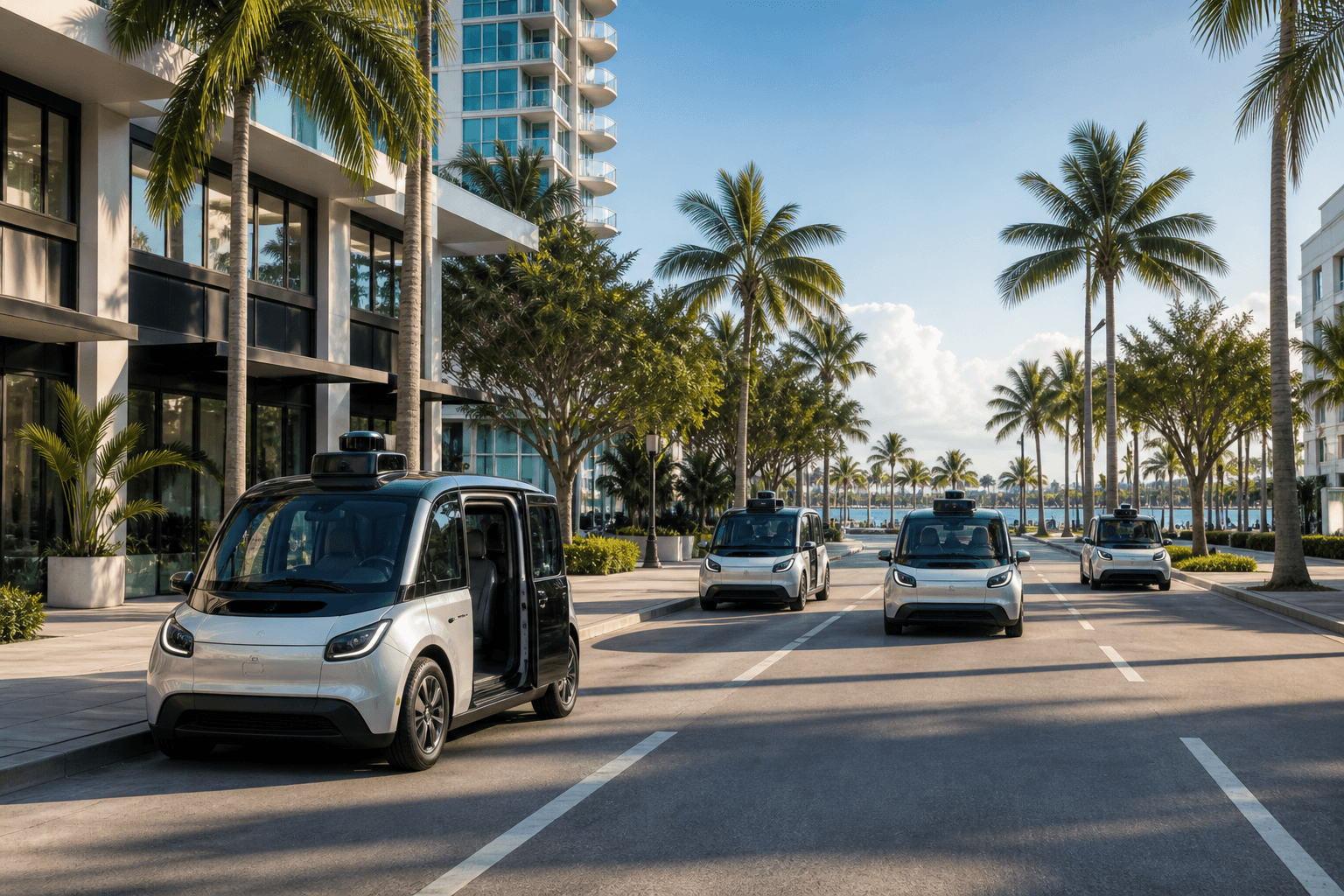
Robotaxi companies have announced enough future cities to populate a small continent. Waymo's latest move is different because the cars are taking public riders now.
The company has launched service in Tampa, Denver, and San Diego, with access opening to riders on a rolling basis through the Waymo app. Waymo says the three additions bring its commercial footprint to 14 cities. Axios reports that the Tampa service territory covers roughly 50 square miles.
Each market adds a different operating problem. Denver brings winter weather and mountain-region driving patterns. San Diego adds dense coastal movement and cross-city traffic. Tampa brings heavy rain, tourist behavior, bridges, and Florida's particular talent for turning ordinary roads into live-action systems tests. A system that works only inside one carefully understood geography is a pilot. A system that can be deployed repeatedly starts looking like a platform.
That does not make expansion automatic. Public service still requires local mapping, fleet operations, maintenance, remote assistance, regulatory coordination, incident response, and customer support. The autonomous driving stack gets the attention, but the boring machinery around it determines whether the service can actually scale.
For Florida, Tampa is a meaningful bridge between autonomous vehicle experimentation and normal transportation. The launch does not cover the Space Coast, and it should not be framed as if it does. But it creates a nearby operational reference for cities deciding how robotaxis fit into airports, downtown traffic, emergency response, and public transit networks.
The strategic question is no longer whether a driverless car can complete a ride. That proof has been established. The question is whether one operator can launch new territories with a declining amount of drama, capital, and custom work. When three city openings become one announcement, repeatability is the real signal.
LaunchPad positionAutonomous driving is shifting from a single-city technical proof into a repeatable market-launch discipline. The durable advantage will come from operating safely across different roads, weather, regulators, and service territories without rebuilding the company for every city.
This report draws on the linked primary sources and reputable reporting. Company statements are treated as claims until independently demonstrated.