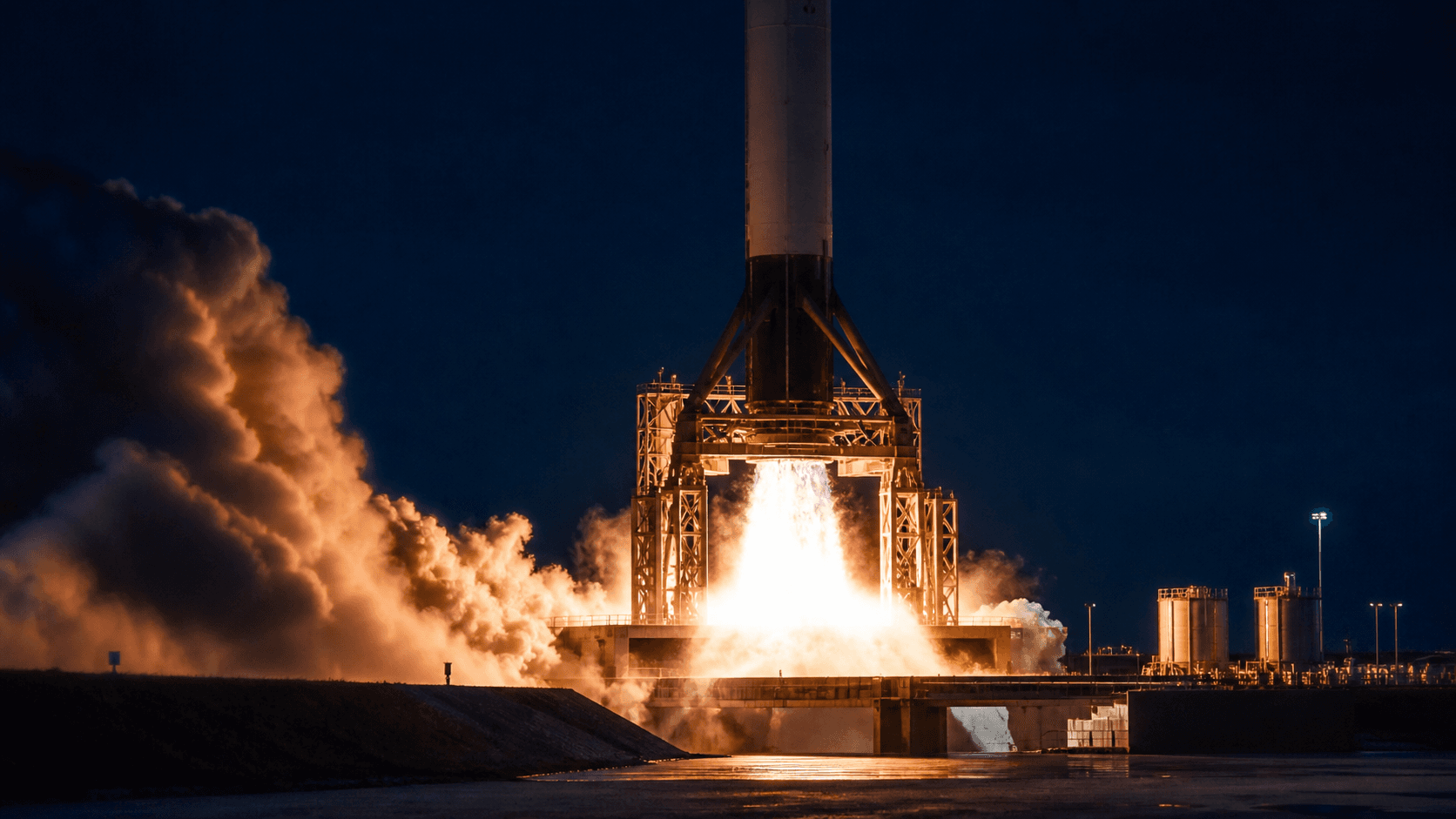
Thirty-three engines firing together is a serious result. It is also not orbit. SpaceX completed a full-duration static fire of the Super Heavy booster assigned to Starship Flight 14 on August 28, moving the vehicle through one of the loudest checkpoints in the preflight sequence.
The company published video of the test and identified it as a full-duration firing with all 33 engines. Space.com independently reported the event from Starbase in South Texas. SpaceX had already completed separate static-fire work on the upper stage, including a six-engine burn and a single-engine test tied to an intended deorbit maneuver.
Ground firing matters because clustered propulsion is a systems problem. Engines, plumbing, controls, pad infrastructure, and shutdown logic all have to behave under enormous thermal and acoustic stress. A full-duration result gives engineers real data from the assembled booster instead of confidence borrowed from component tests.
Flight 14 is expected to attempt Starship's first orbital mission. That changes the responsibility surface. Reaching orbit is only the first half of the job. The vehicle must also manage payload operations, demonstrate a credible deorbit sequence, survive reentry as planned, and keep debris risk inside approved boundaries. A static fire cannot prove any of that.
The signal is not that launch success is guaranteed. It is that SpaceX continues to convert a spectacular development program into a sequence of measurable engineering gates. The next gate is brutally clear: make the complete orbital mission behave like a controlled transportation system, not a collection of individually impressive tests.
LaunchPad positionA clean static fire validates a ground-test configuration. Flight 14 still has to prove ascent, orbital operations, payload handling, deorbit execution, and safe reentry as one system.
This report draws on the linked primary sources and reputable reporting. Company statements are treated as claims until independently demonstrated.