NASA is giving Starliner another path to regular service. It is not giving the spacecraft a clean bill of health. The distinction matters more than the return date: the next vehicle is supposed to gather engineering evidence without astronauts aboard, while additional hardware changes remain between that flight and a crewed mission. This is a recovery program with several different finish lines, not a countdown that started at Monday's briefing.
On September 28, NASA and Boeing outlined an uncrewed Starliner-1 flight that could take place in December 2026 or January 2027, followed by a current plan to fly astronauts on Starliner-2 in 2028. NASA also said it intends to exercise options for a fifth and sixth station flight and work with Boeing and United Launch Alliance on certifying Vulcan for crew transportation after Atlas V's final flight. These are plans and intended contract actions. Neither a completed certification nor an exercised option should be inferred from the announcement.
Reuters' account of the briefing independently corroborates the planned redesign and 2028 crew target. It also reports NASA Administrator Jared Isaacman's description of up to five crewed station missions. That is consistent with an uncrewed flight occupying one place in a six-flight sequence; it should not be confused with six new astronaut missions awarded on Monday. The independent report confirms what officials said, not whether the engineering changes will perform as intended. That evidence still has to come from testing and review.
The most consequential detail is the sequence of propulsion work. According to NASA, Boeing has already made thermal modifications to the service module. Starliner-1 is intended to evaluate that thermal performance, collect data needed for system qualification and expose remaining risks before people return to the spacecraft. NASA and Boeing have also agreed on a further thruster valve modification. The agency says that change will be completed after the uncrewed flight, alongside other improvements needed for certification.
Those are different engineering questions. Thermal testing asks whether the environment around the hardware stays within conditions the system can tolerate. A valve redesign addresses how a component behaves within that environment. NASA attributes the earlier service-module thruster trouble to both thermal conditions and features inherent in the design. Improving the environment therefore does not, on its own, establish that the component design has no remaining weakness. Monday's plan recognizes that distinction by separating the thermal evaluation flight from the subsequent valve work.
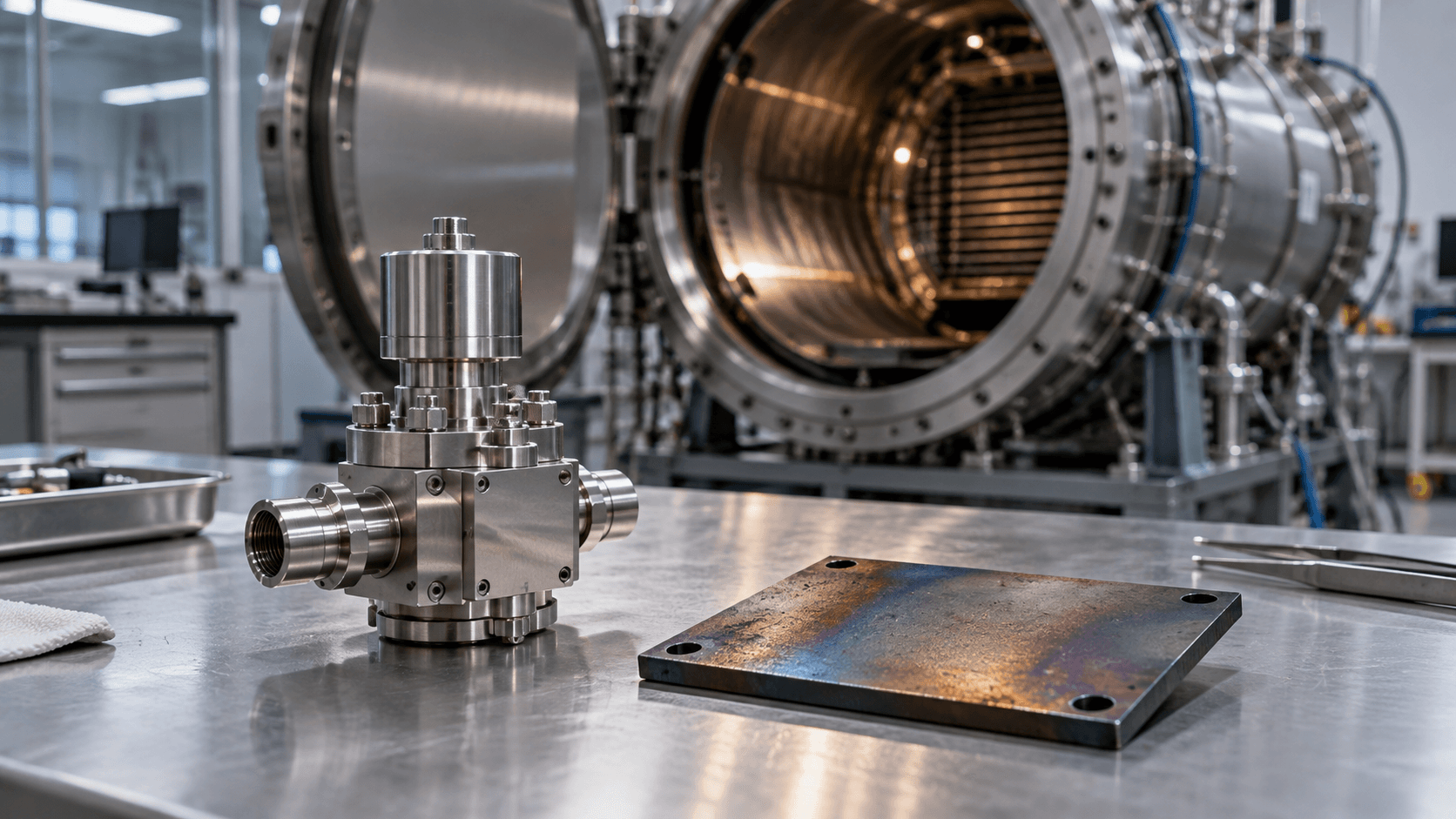
The valve modification is aimed at poppet seal extrusion and its adverse effect on thruster performance, NASA says. In plain English, the concern is a seal deforming out of its intended position in a valve, with consequences for how that thruster operates. The public update does not provide the dimensions, materials or qualification margins needed to judge the redesign independently. It would be premature to describe the solution as proven simply because the failure mechanism now has a more specific engineering description.
NASA also lists new crew-module thrusters, batteries and minor parachute modifications among the work ahead of certification. That means the program is not merely repeating the previous mission with one thermal adjustment. The eventual crewed configuration will incorporate additional changes. The important question after Starliner-1 will be which requirements that flight actually demonstrated and which still depend on later hardware, ground tests or analysis. A successful uncrewed mission would be valuable evidence, but it cannot retroactively test components that were not yet installed.
The history explains why that distinction cannot be treated as bureaucratic caution. Starliner launched its first crewed test on June 5, 2024. NASA says the spacecraft's mission, initially planned for eight to 14 days, extended to 93 days after propulsion anomalies emerged in orbit. The capsule returned without its astronauts in September 2024. Butch Wilmore and Suni Williams returned aboard Crew-9 in March 2025. The spacecraft's 93-day flight and the astronauts' much longer stay are separate timelines, frequently blurred in descriptions of the incident.
NASA's February 2026 investigation announcement described more than a defective part. It identified hardware failures, qualification gaps, leadership mistakes and cultural problems. The agency classified the flight as a Type A mishap because of the loss of maneuverability approaching the station and associated financial damage. NASA explicitly noted that control was recovered before docking and there were no injuries. The serious classification is a statement about the event and its risk, not a claim that its outcome matched a fatal accident.
More uncomfortable was NASA's acknowledgement that the objective of having two transportation providers had influenced engineering and operational decisions. That admission is directly relevant to the recovery plan. Maintaining a second provider can be strategically sensible while a particular vehicle remains unready to carry people. The need for redundancy does not supply missing qualification data. If the organization lets the value of a future capability stand in for evidence about the present hardware, it repeats the decision problem the investigation identified.
The June review by NASA's Office of Inspector General adds an institutional explanation. Auditors said NASA had been overconfident in Boeing's experience and its use of previously flown components, accepted unrealistic schedules, and failed to exercise limited contractual rights to access flight-simulator training data. They also identified workforce constraints affecting oversight. These findings make the recovery challenge bigger than manufacturing replacement hardware: NASA needs enough access, technical capacity and authority to challenge the contractor's evidence before approving the next step.
Previously flown components can be useful starting points, but the Inspector General's findings caution against treating their heritage as a substitute for assessing the new system. For Starliner, NASA now specifically says service-module reaction-control thrusters operated outside their engineering qualification during the crewed test. The relevant comparison is not whether a part once worked somewhere. It is whether the installed design, operating conditions and mission demands fall within what has actually been demonstrated. That is why the thermal data from the next flight matters.
The commercial arrangement makes those responsibilities especially important. Under the model described by the Inspector General, companies own their vehicles and NASA buys transportation services. The original 2014 fixed-price awards were $4.2 billion for Boeing and $2.6 billion for SpaceX, with contract values subsequently increasing. Those historical figures are not current all-in costs or directly comparable ticket prices. They establish the procurement model, in which government safety responsibility coexists with contractor ownership rather than disappearing because a service is purchased commercially.
Auditors also questioned $127.9 million in Boeing payments for additional flights that were not certain to occur, on top of $43 million questioned in a 2019 report. These are audit findings, not a finding of criminal wrongdoing. They create a concrete accountability issue for the new intention to exercise more flight options: the government should explain what it is buying, when the obligation becomes firm and what happens if readiness slips. Monday's NASA release does not supply the detailed terms of those future actions.
There is an important change since that June audit. Its warning about insufficient contracted flights should not be repeated as though nothing has happened since. On September 18, NASA awarded SpaceX Crew-15, Crew-16 and Crew-17 through a $946 million modification, with performance through 2030 and readiness dates in 2027 and 2028. We previously covered that award. Here it is relevant context: NASA is extending an existing transportation service while separately trying to recover the second provider.
The SpaceX modification includes ground operations, launch, time in orbit, return and recovery, cargo transportation and a docked lifeboat capability. Dividing its total by a passenger count would erase those services and create a misleading fare comparison. More broadly, the two procurement tracks answer different needs. One buys additional missions from a certified system. The other seeks to establish another usable system. Neither proves that the other is unnecessary, but their different readiness levels should remain visible in any account of NASA's strategy.
Vulcan introduces another distinct approval track. NASA says it will work with Boeing and ULA to certify the rocket for use after Atlas V. That preserves a prospective path beyond the existing launch vehicle, but a commitment to certification work is not certification itself. It also should not be read as a finalized commercial-station manifest. NASA frames Starliner's future in terms of both the International Space Station and later commercial destinations; the announcement does not identify secured customers or flight dates for those later destinations.
The schedule gives this work economic urgency without making it technically easier. The Inspector General describes 2030 as the planned end of station operations, while NASA's new astronaut-return target is 2028. Those dates leave a limited intended station-service window if the plan holds. That is an implication of the published timetable, not a forecast of how many missions will actually fly. Delays, certification outcomes and future demand can change the result. A later commercial market should not be booked as revenue before it exists.
For Space Coast readers, the useful measure of progress is therefore not another optimistic launch month. It is a sequence of observable decisions: the uncrewed mission's actual results, the disposition of residual risks, qualification of the revised crewed hardware, the agency's treatment of investigation recommendations, and the status of rocket certification and flight options. NASA says the investigation produced 61 recommendations. A launch can demonstrate progress on some engineering questions while leaving organizational corrective work unfinished; both deserve follow-through.
Starliner may still become the second transportation capability NASA has wanted. The stronger case for continuing is that the agency can convert each remaining uncertainty into evidence, with enough independence to reject weak answers. Monday supplied a more explicit recovery sequence and a renewed statement of intent. The next meaningful milestone is not confidence at a microphone. It is a test record that supports the next decision, with the differences between an engineering flight and an astronaut flight kept firmly intact.
LaunchPad positionTrack the evidence from the uncrewed flight, the revised crewed configuration and certification decisions separately from target launch dates.
This report draws on the linked primary sources and reputable reporting. Company statements are treated as claims until independently demonstrated.