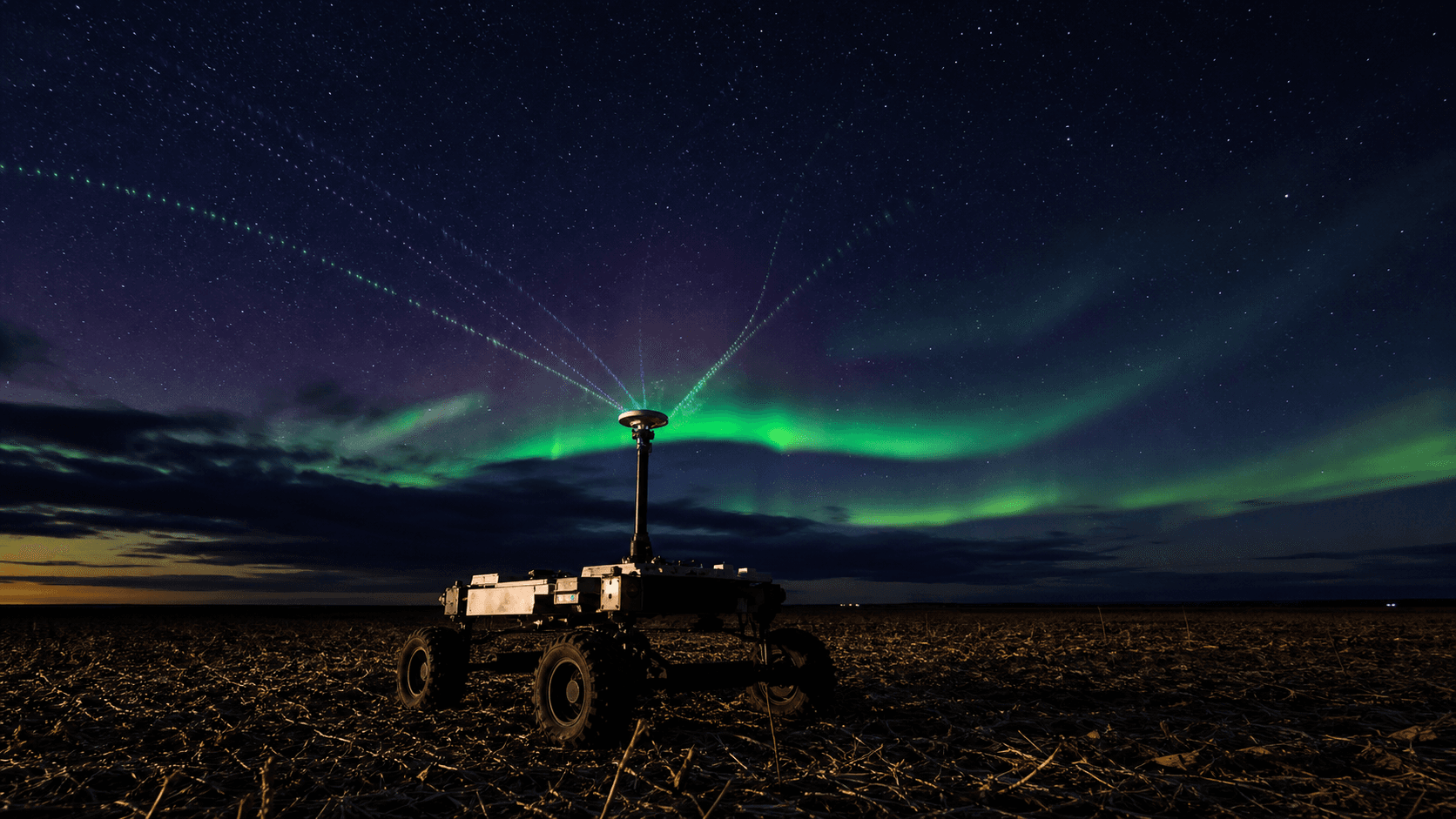
GPS can be online, transmitting, and spectacularly wrong. That is the uncomfortable result of new research into the November 2025 superstorm, which pushed positioning errors above ten meters across parts of the continental United States.
The study, published in Geophysical Research Letters on August 29, examines how storm-driven ionospheric dynamics disrupted radio-frequency applications at mid-latitudes. The researchers found that auroral precipitation expanded far enough toward the equator to produce pronounced signal scintillation and horizontal position errors across regions that operators do not normally treat like the auroral zone.
The satellites were not falling out of the sky. Their radio signals were crossing a violently disturbed ionosphere. Changes in electron density altered propagation before the signals reached receivers on the ground, corrupting the timing measurements used to calculate position. That distinction matters because a receiver can appear healthy while its solution drifts beyond the tolerance of a machine relying on precision.
Ten meters is not an inconvenience for precision agriculture, surveying, autonomous transport, aviation, or infrastructure timing. It is a different operating state. The study's underlying data are available through a nine-gigabyte Zenodo record sourced from Madrigal and UNAVCO, giving researchers a path to test models and mitigation strategies against the event rather than a sanitized simulation.
Space weather belongs in infrastructure planning for the same reason floods and cyberattacks do: the dependency is real whether the organization acknowledges it or not. The next move is not panic. It is resilient navigation that can detect degraded confidence, cross-check other sensors, and fail safely when the sky changes the math.
LaunchPad positionGPS did not simply switch off. The ionosphere altered how radio signals traveled, exposing a failure mode that precision agriculture, autonomous transport, surveying, and other machine systems need to model and survive.
This report draws on the linked primary sources and reputable reporting. Company statements are treated as claims until independently demonstrated.