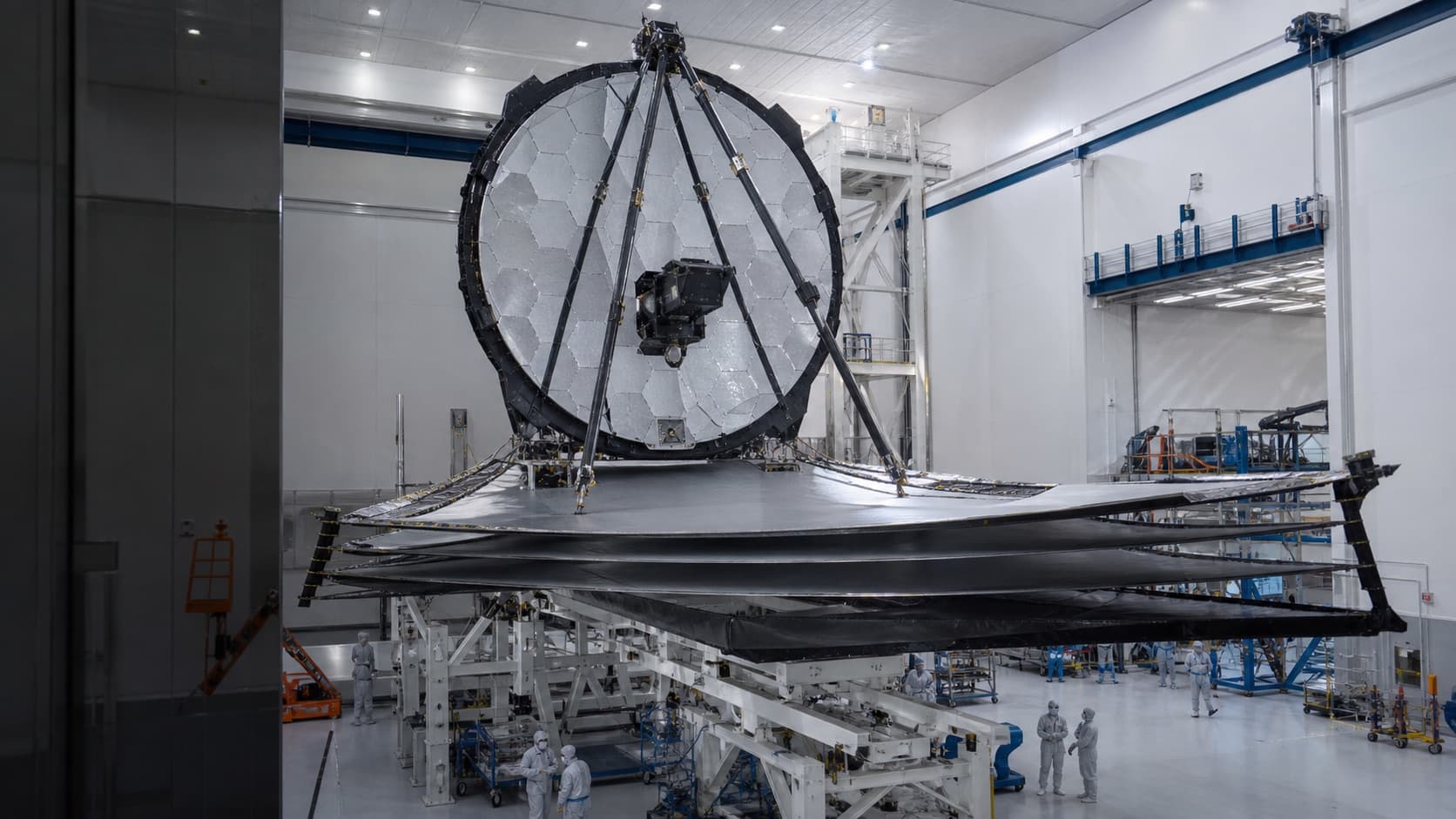
NASA and SpaceX have completed the flight-readiness review for the Nancy Grace Roman Space Telescope and certified the mission to enter final launch preparations. The current target is no earlier than 7:26 a.m. Eastern on August 30 aboard Falcon Heavy from Kennedy Space Center.
Launch stories naturally collapse into spectacle: the rocket, the countdown, the expensive object sitting on top of controlled violence. Roman deserves a different frame. Its strategic value is not just the telescope. It is the throughput of the entire system.
Roman uses a 2.4-meter primary mirror, the same diameter class as Hubble, but pairs it with a wide-field instrument designed to survey enormous areas of the sky. NASA says the observatory is expected to return around 11 terabits of data per day while studying dark energy, dark matter, exoplanets, and billions of galaxies. Hubble gave science a narrow, astonishing eye. Roman is built more like a mapping operation.
That changes the constraint. Discovery increasingly depends on the pipelines that decide what gets transmitted, processed, indexed, compared, and made usable by researchers who did not design the spacecraft. The observatory is the sensor. The data architecture determines how much science escapes the sensor.
There is also an execution lesson hiding beneath the cosmic ambition. Roman arrived at launch readiness after millions of components, contamination controls, vibration tests, partner systems, and schedule decisions had to work together. Space programs are architecture diagrams forced to survive reality. Most software teams could use the humility.
If launch and commissioning proceed as planned, Roman will not simply create prettier pictures. It will create a shared evidence layer for astronomy. That is what durable infrastructure does: it makes discoveries possible for people who were never in the room when the system was built.
LaunchPad positionThe breakthrough is not merely putting another mirror in space. It is building the scientific supply chain capable of turning a firehose of observations into discoveries other teams can compound.
This report draws on the linked primary sources and reputable reporting. Company statements are treated as claims until independently demonstrated.