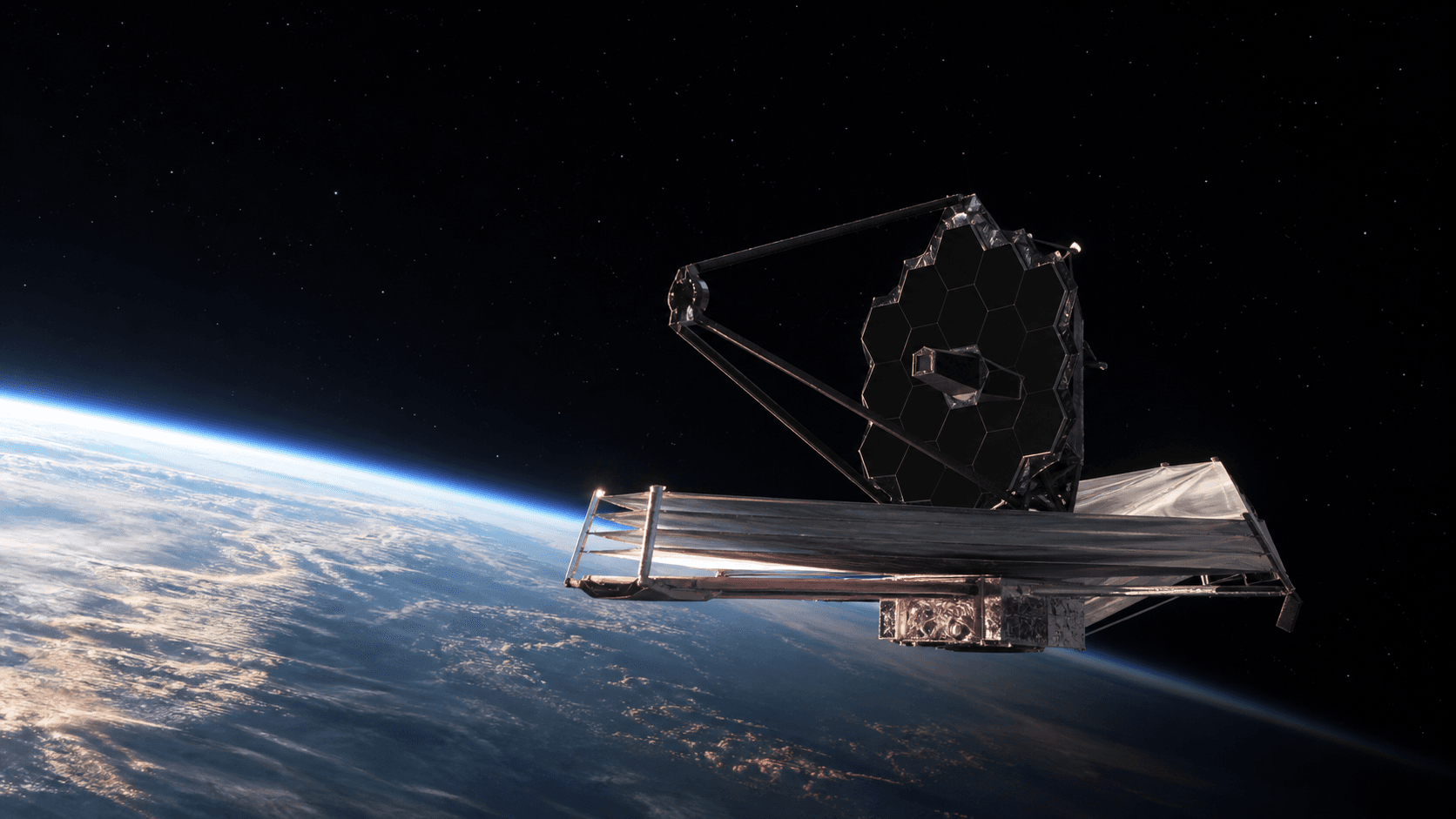
A rocket launch makes for better television than a commissioning checklist. The checklist is where a telescope becomes a scientific instrument. NASA's Nancy Grace Roman Space Telescope left Launch Complex 39A at 7:26 a.m. Eastern on Sunday aboard a Falcon Heavy, starting a three-month journey toward the second Sun-Earth Lagrange point about one million miles from Earth.
The early sequence went cleanly. NASA says controllers received telemetry seven minutes after launch, the rocket separated from Roman 31 minutes into flight, and the observatory deployed its solar panels and lower sun shade one hour and 23 minutes after liftoff. Those are material milestones, not completion. The high-gain antenna, aperture cover, course corrections, instrument activation, and calibration campaign still have to work.
Roman's advantage is not simply sharper infrared vision. Its Wide Field Instrument uses a 300-megapixel camera with 18 detectors to scan enormous sections of sky without the long resets that slow narrower observatories. NASA says the system is designed to survey the universe about a thousand times faster than Hubble and return roughly 1.4 terabytes of data every day, the highest daily rate yet for a NASA astrophysics mission.
That throughput changes the bottleneck. Astronomers will not be waiting only for photons. They will be building pipelines capable of finding useful events inside a continuous flood, with machine learning and citizen-science programs helping flag what deserves human attention. A discovery machine still needs a discovery operation around it.
First images are expected in early 2027 if commissioning holds. Until then, the honest status is straightforward: Roman is safely off the ground, communicating, and headed for L2. The hardware earned the mission. Operations now have to earn the science.
LaunchPad positionThe launch converted Roman from completed hardware into an operating mission. The next proof points are deployment, calibration, communications, and the ability to process its unprecedented astrophysics data rate.
This report draws on the linked primary sources and reputable reporting. Company statements are treated as claims until independently demonstrated.