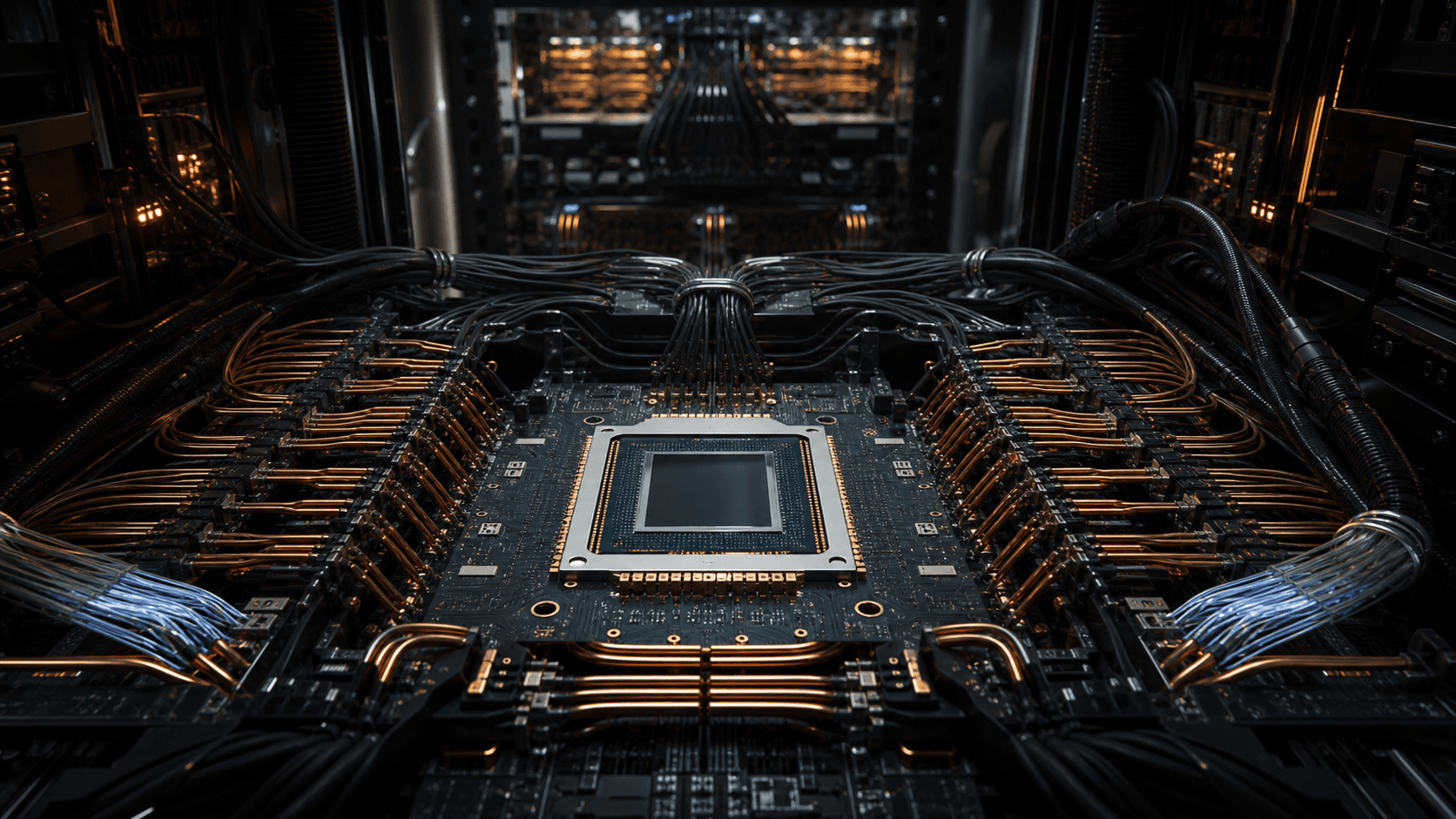
The hyperscalers want custom AI chips because paying Nvidia for every unit of intelligence is a hell of a tax. Nvidia's answer is not to pretend that movement can be stopped. It is to own the system those custom chips must join.
Nvidia announced a $3.5 billion investment in convertible bonds issued by MediaTek and a wider partnership across data-center infrastructure, local AI computers, and automotive systems. The most consequential piece is MediaTek's adoption of NVLink Fusion, which lets cloud providers and model developers connect custom processors into Nvidia rack-scale systems.
That changes where the moat sits. A custom accelerator can replace an Nvidia GPU for a particular workload while still depending on Nvidia interconnects, networking, rack design, and software to behave like part of a useful cluster. The company can give up the center square and keep charging rent on the board.
MediaTek said in June that it expects its custom data-center ASIC business to generate $2 billion in 2026. That is a company forecast, not booked future revenue. The demand signal is still obvious. Large AI buyers want silicon tuned to their models, power budgets, and economics instead of a universal chip with a universal margin attached.
The strategic test is execution. NVLink Fusion has to make custom silicon easier to deploy without making Nvidia interchangeable. MediaTek has to convert deep consumer-chip experience into credible data-center delivery. If both happen, Nvidia does not need to win every accelerator socket. It needs to make the rack the product and every chip inside it a tenant.
LaunchPad positionNvidia's moat is moving beyond the accelerator die. If custom processors still need its interconnect, rack architecture, networking, and software, the company can participate even when somebody else designs the chip.
This report draws on the linked primary sources and reputable reporting. Company statements are treated as claims until independently demonstrated.