Space exploration has an infrastructure problem that launch videos politely ignore. Every spacecraft that travels beyond Earth eventually needs to send data home, and all of them are competing for time on a small number of giant antennas spread across the planet.
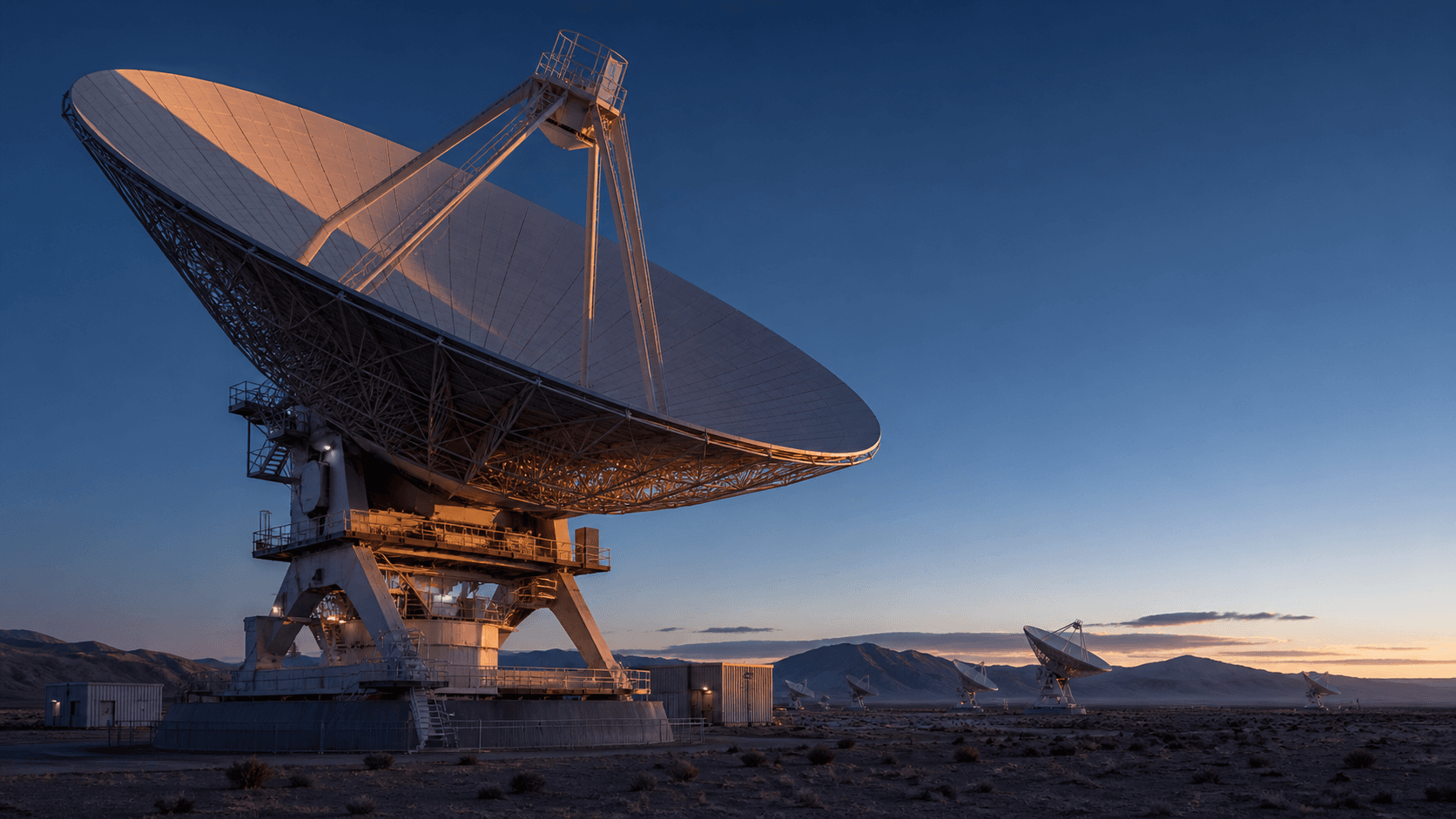
NASA says Deep Space Station 23 is now operational at the Goldstone complex near Barstow, California. The new 34-meter radio antenna began supporting missions on August 3 after testing from May through July. It has already communicated with spacecraft including the Mars Reconnaissance Orbiter, Psyche, Juno, Voyager 1, and the Chandra X-ray Observatory.
The Deep Space Network uses facilities in California, Spain, and Australia so Earth’s rotation does not cut missions off from contact. NASA says the network supports more than 40 spacecraft exploring the solar system and interstellar space. More than 100 NASA and non-NASA missions rely on it together with the agency's Near Space Network.
DSS-23 is the fifth new 34-meter antenna delivered through an enhancement program that began in 2009. A sixth is planned for Canberra in 2029. The smaller dishes can operate together as an array, providing backup capacity for each site's aging 70-meter antenna. That matters because the 70-meter systems have spent more than half a century doing near-continuous work and are becoming expensive to maintain.
The dish itself weighs and moves like industrial infrastructure, but the real system includes radio hardware, underground electronics, software, calibration, mission scheduling, and teams that must make the whole stack behave as one instrument. NASA's project manager said integration, not physical construction, was the hardest part. That sentence could be pinned above every ambitious engineering program.
The capacity problem will keep getting worse in a good way. More lunar missions, more planetary spacecraft, higher-resolution instruments, and longer mission lives create more data and more demand for contact time. Launch capability can scale faster than a global deep-space network if nobody treats communications as a first-class investment.
DSS-23 will not trend like a rocket landing. It will quietly determine how much science those rockets can bring back. Infrastructure is often boring right up until everyone needs the same scarce minute of it.
LaunchPad positionExploration scales only when communications scale with it. The next era of space will be constrained as much by networks, scheduling, and maintenance as by rockets and spacecraft.
This report draws on the linked primary sources and reputable reporting. Company statements are treated as claims until independently demonstrated.