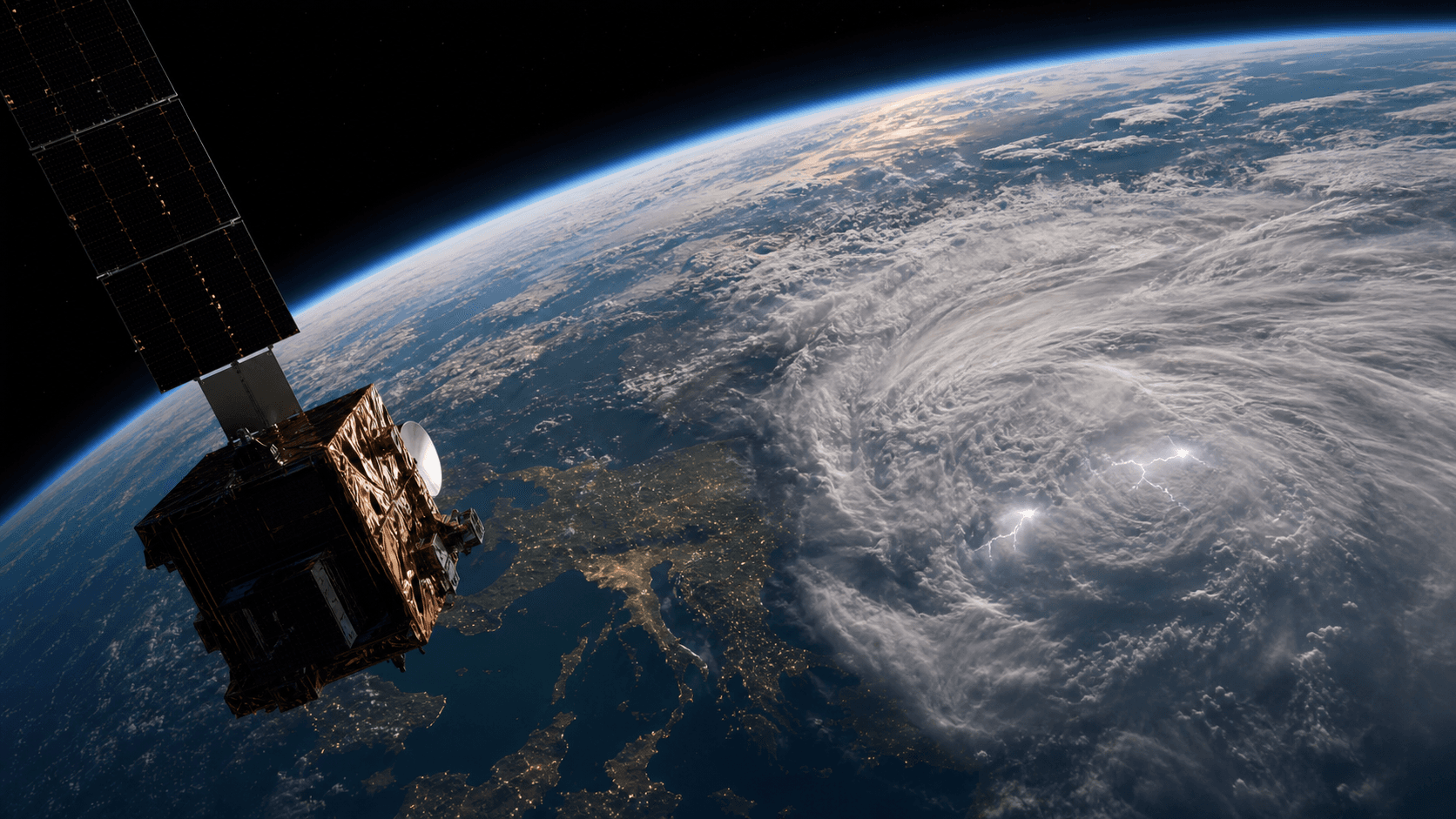
Weather satellites do not prevent disasters. They buy minutes, context, and confidence. Sometimes that is the difference between a forecast people read and a warning they can act on.
Europe's second Meteosat Third Generation Imager, MTG-I2, launched on Ariane 6 from French Guiana on August 27. ESA says the spacecraft separated successfully and established communication with the Malindi ground station. It now begins orbit raising, deployment, checkout, and commissioning before entering operational service.
The launch completes the first three-satellite MTG family in orbit. The earlier imager and sounder are already commissioned and operated by Eumetsat. MTG-I2 adds continuity and backup capacity while enabling a rapid scanning service over Europe with new observations every 2.5 minutes once commissioning is complete.
That refresh rate matters because dangerous weather evolves between conventional reporting cycles. Rapid imagery can help meteorologists track storms, lightning, wildfires, and atmospheric pollution as they change. MTG-I2 carries both a Flexible Combined Imager and a Lightning Imager, extending the system beyond prettier cloud pictures into short-term operational forecasting.
The satellite is not fully operational yet. Engineers still have to raise its orbit, establish stable Earth pointing, test instruments, and validate the ground segment. Launch success removed one risk. It did not complete the mission.
Ariane 6 also reached a useful milestone. This was its ninth launch and its first mission carrying a satellite to geostationary transfer orbit. Europe put new weather infrastructure into orbit using its own heavy-lift system, which connects scientific capacity to strategic access.
The next test is boring by design: consistent data, reliable handoff, and forecasts that improve because the observation loop tightened. The hardware becomes infrastructure when nobody has to think about whether it will be there during the next storm.
LaunchPad positionThe value of weather infrastructure compounds when observation arrives fast enough to change a warning, not merely explain the storm after it happened.
This report draws on the linked primary sources and reputable reporting. Company statements are treated as claims until independently demonstrated.