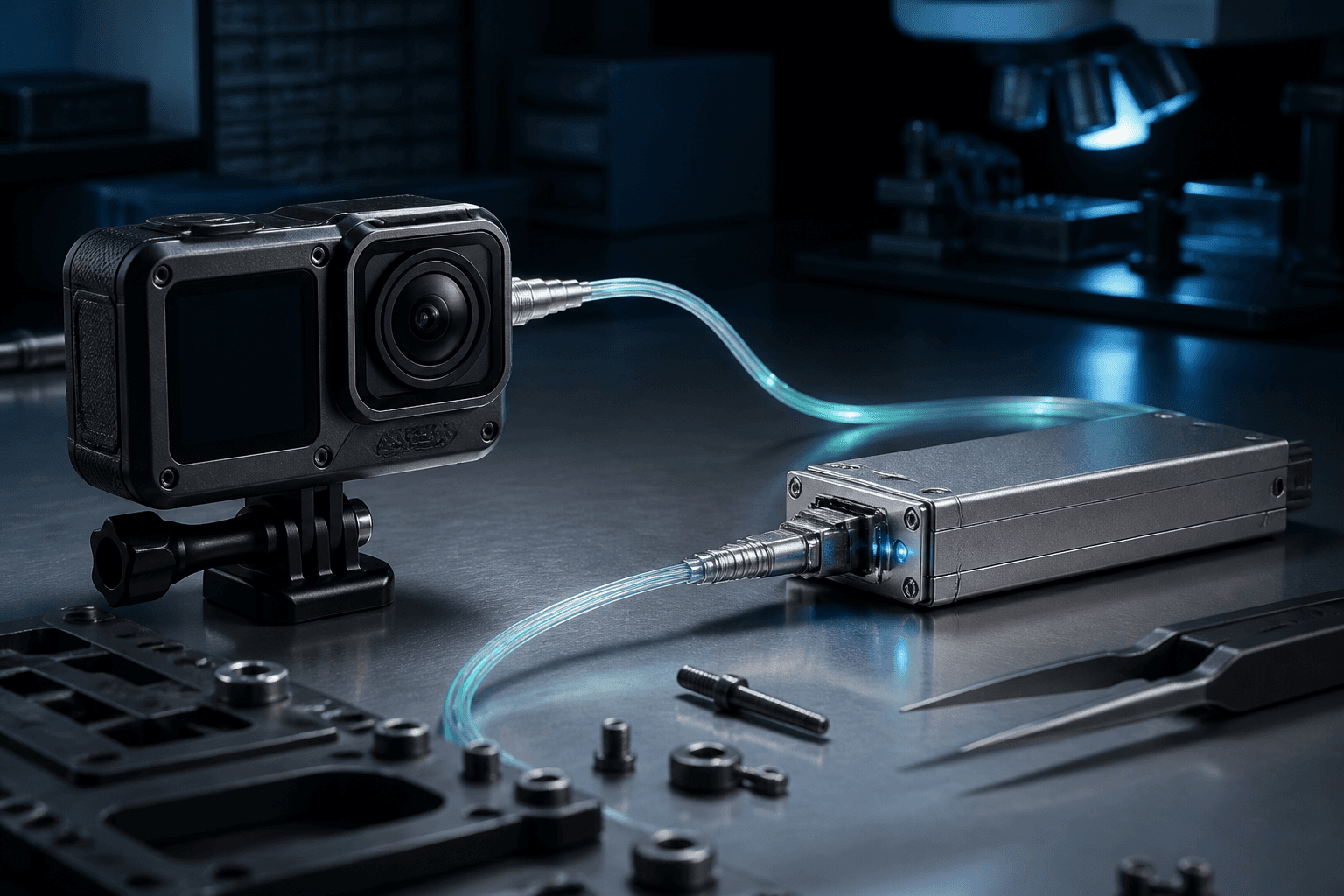
GoPro built a category around cameras people strapped to helmets. Its proposed next chapter is optical infrastructure for AI data centers, defense, and aerospace. That is either a sharp reinvention or one hell of a corporate identity crisis.
The company has signed a definitive agreement to merge with Starman Optical, a maker of optical transceivers. Under the announced terms, GoPro shareholders would receive $285 million in aggregate cash, described as $1.14 per share subject to adjustment, while retaining roughly 10 percent of the combined company. About $92 million of GoPro debt is expected to be repaid at closing, and the combined business is expected to remain publicly listed.
The transaction has not closed. It still faces the conditions and approvals described by the companies, so this is a proposed strategic reset, not a completed acquisition. That distinction matters when the story involves cash distributions, debt repayment, and a new operating identity.
The logic is broader than putting two optics companies under one roof. Starman sells components that move information through data centers and other high-performance systems. GoPro brings imaging technology, a recognized brand, public-company infrastructure, and a shareholder base that has watched the action-camera market become brutally mature. The combined pitch points toward AI infrastructure, robotics, defense, aerospace, and consumer imaging.
A fashionable market adjacency is not a strategy by itself. Optical transceivers sit inside a demanding supply chain with fierce competition, qualification cycles, pricing pressure, and customers that care much more about performance and reliability than legacy brand recognition. The combined company has to prove that this is operational leverage, not an AI label stapled to a tired equity story.
Still, the deal is a reminder that public companies can become shells for category migration. GoPro is not simply selling itself and disappearing. If the agreement closes as planned, shareholders receive cash, debt gets cleared, and the remaining vehicle aims at a market with stronger structural demand. Reinvention is allowed. Execution decides whether it becomes strategy or cosplay.
LaunchPad positionA legacy consumer hardware brand is being used as a public-market vehicle for optical infrastructure. The merger is not closed, and the strategic story only works if the combined company can convert photonics demand into durable revenue rather than merely attaching itself to the AI narrative.
This report draws on the linked primary sources and reputable reporting. Company statements are treated as claims until independently demonstrated.