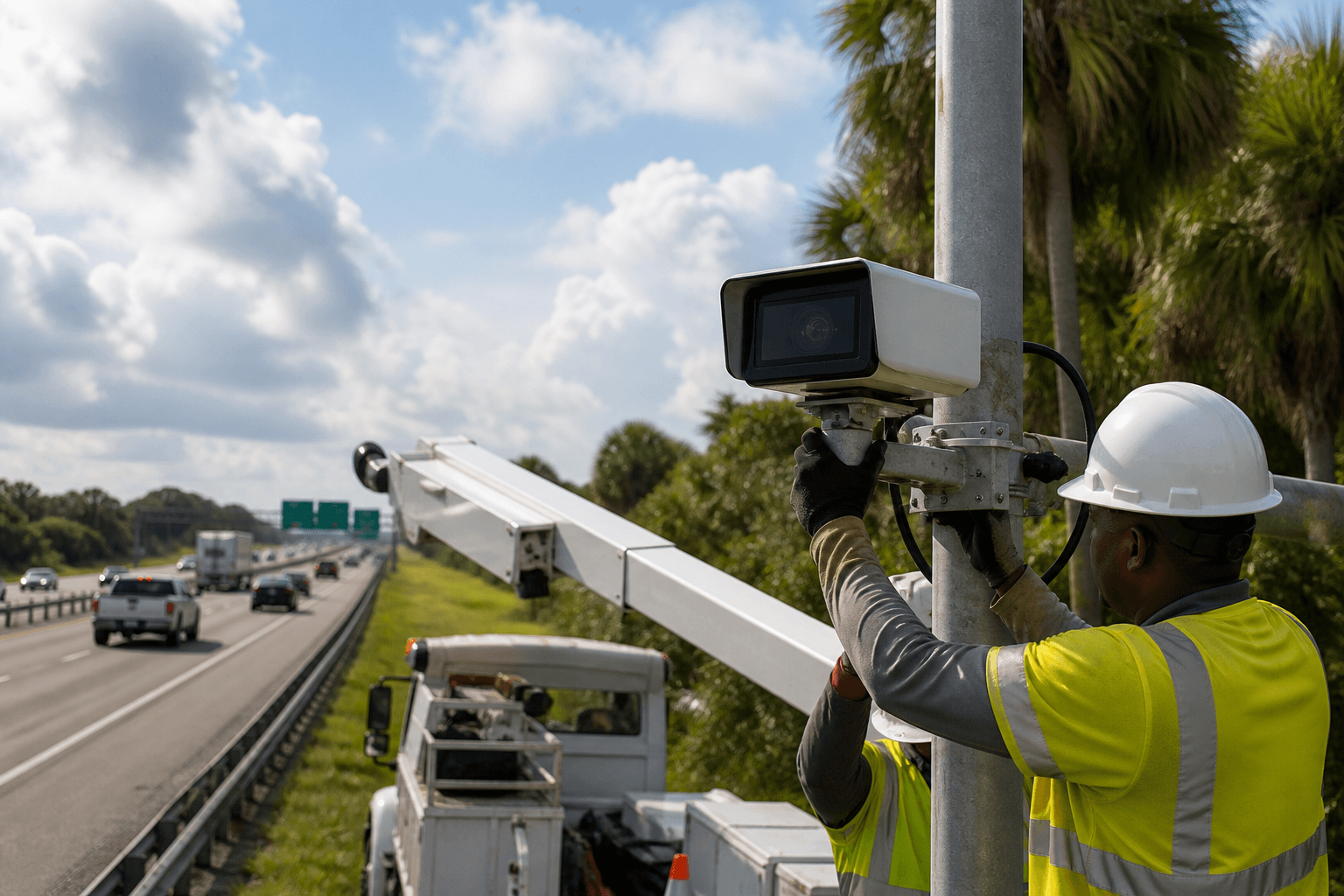
Florida just discovered that the fastest way to constrain a surveillance network may not be a grand privacy law. It may be control of the roadside pole.
The Florida Department of Transportation has revoked active permits for automated license plate readers located within state highway rights-of-way and ordered permit holders to remove the equipment within 30 days. The department cited rapid deployment, reported misuse, privacy concerns, and the risk of creating a broad surveillance system without sufficient oversight.
The scope matters. This is not a ban on every plate reader in Florida. It applies to equipment occupying rights-of-way controlled by FDOT. Cameras installed on local roads, private property, or other locations may fall outside the order. Any headline that turns a targeted infrastructure action into a complete statewide prohibition is overselling it.
Still, the action is consequential. Automated plate readers do not merely capture a car passing one point. Networked systems can assemble location histories across jurisdictions and make those records searchable by law enforcement agencies far beyond the camera's immediate community. The value for investigations is obvious. So is the risk when access, retention, auditing, and cross-agency sharing are weak.
For the Space Coast, this is not an abstract fight. The region combines ports, launch infrastructure, military facilities, tourist traffic, and fast-growing communities. Public safety has legitimate requirements here. That makes precise governance more important, not less. A security tool without narrow purpose, accountable access, and a visible chain of responsibility can become a permanent capability nobody remembers authorizing.
Florida has not solved the policy problem. It has applied a hard operational brake using authority it already controls. The next move should be a clear statewide framework covering who can deploy these systems, what data they keep, who can search it, and what happens when the rules are broken. Infrastructure should not get constitutional significance by quietly accumulating beside the road.
LaunchPad positionSurveillance systems become public infrastructure long before their governance catches up. Florida's order shows that control over physical placement can become a powerful policy lever even when the underlying technology remains legal elsewhere.
This report draws on the linked primary sources and reputable reporting. Company statements are treated as claims until independently demonstrated.