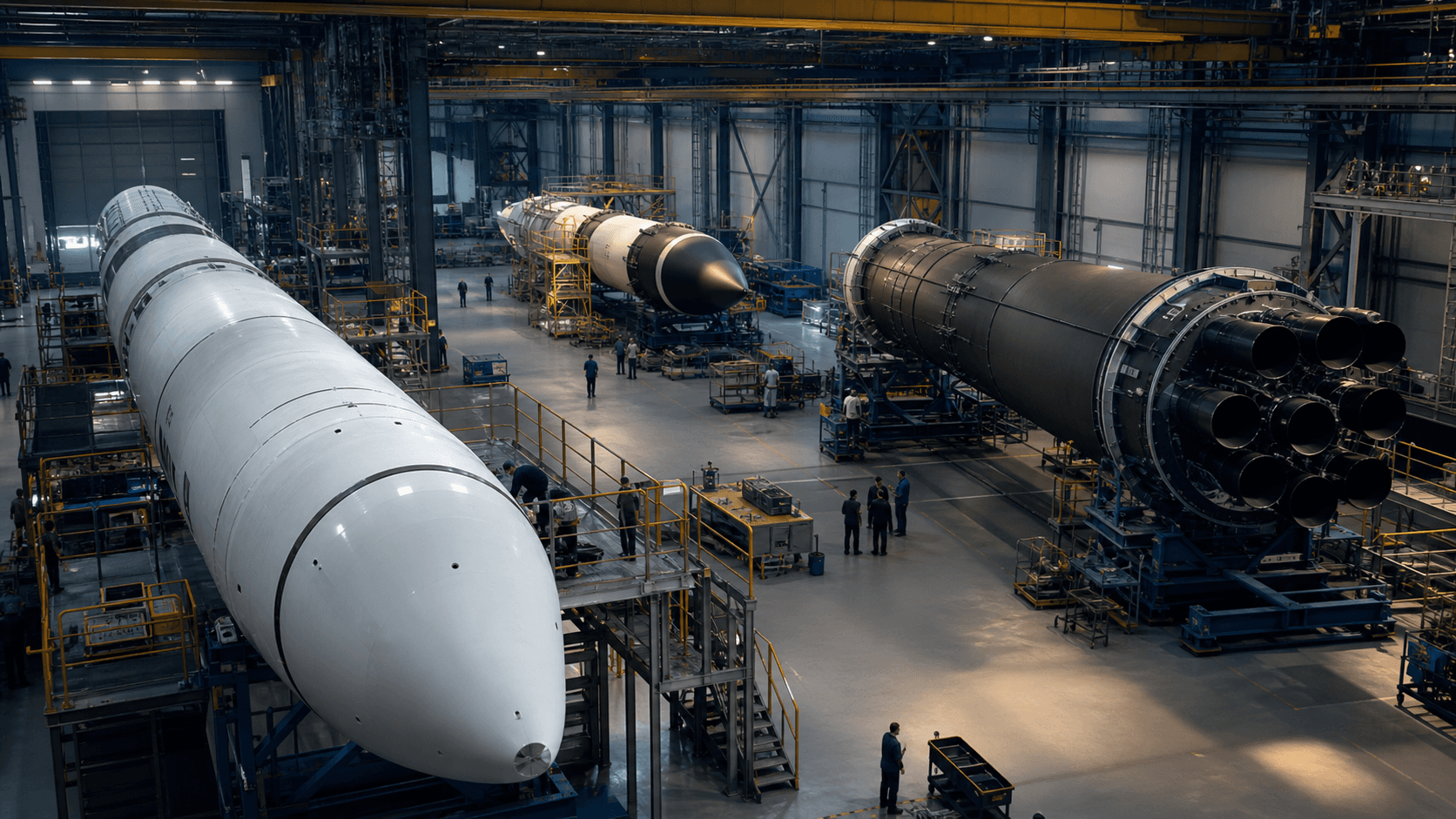
Europe's launch problem is not a shortage of rocket renderings. It is a shortage of independent vehicles that have reached orbit often enough to become infrastructure.
The European Space Agency has signed the first contracts in its European Launcher Challenge with Rocket Factory Augsburg, PLD Space, and Isar Aerospace. ESA lists contract values of 186.9 million euros for RFA, 158.9 million euros for PLD Space, and 197.8 million euros for Isar. A fourth contract with MaiaSpace is still being completed.
The funding is tied to milestones, which is the right shape for this market. Launch companies can unlock support as they make technical and commercial progress. The program also requires providers to achieve an orbital launch before 2028. That requirement keeps public money connected to the one proof point no launch deck can fake.
The three vehicles target different capacity bands. RFA One is designed for up to 500 kilograms to a 500-kilometer sun-synchronous orbit. PLD Space lists up to 540 kilograms for Miura 5 in its current plan. Isar's Spectrum targets up to 1,000 kilograms to low Earth orbit. Targets are not delivered performance, and all three companies still carry execution risk.
The policy design is more interesting than the individual specifications. Europe is trying to create a market, not simply procure another institutional rocket. Multiple providers can widen supply, pressure costs, and give satellite operators alternatives when a vehicle slips or fails.
Public capital cannot manufacture launch cadence by decree. It can finance test hardware, facilities, teams, and early demand while the companies cross the brutal gap between prototype and service. The companies still have to prove reliability, schedule discipline, and an order book that survives beyond the program.
By 2028, the scoreboard will be simple. Which vehicle reached orbit, which customers returned, and which factory can build the next rocket without turning every launch into a bespoke national event? Everything before that is potential energy.
LaunchPad positionEurope does not need more launch announcements. It needs repeatable vehicles, customers, factories, and enough competition that one failure does not freeze the continent's access to orbit.
This report draws on the linked primary sources and reputable reporting. Company statements are treated as claims until independently demonstrated.