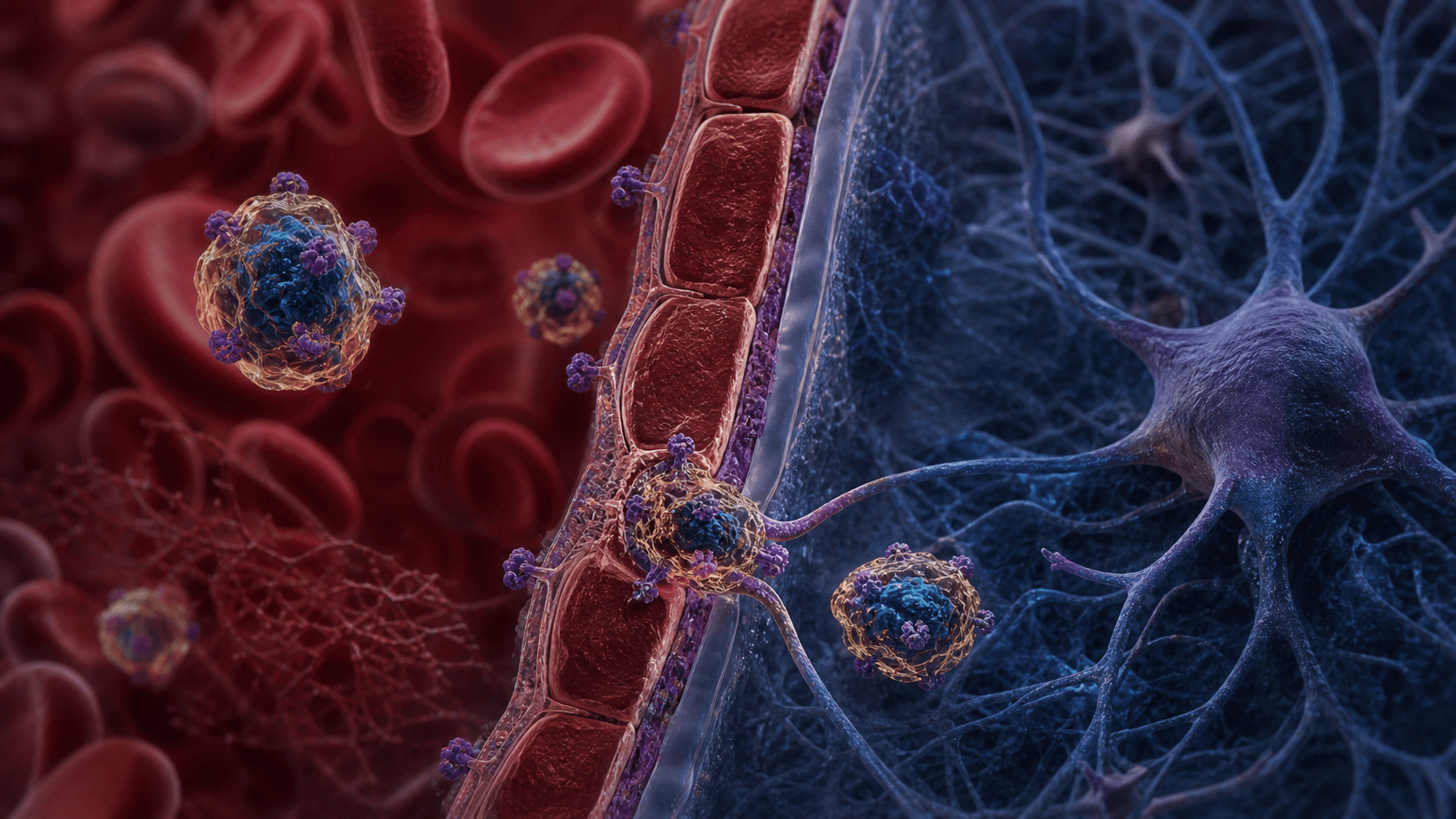
Many promising brain therapies do not fail because the molecule is useless. They fail because the molecule cannot reach the tissue in a useful concentration. The blood-brain barrier is excellent at protecting the brain and terrible at cooperating with drug developers.
A Caltech team has reported a molecular shuttle called BrainCAB that targets carbonic anhydrase IV, a protein on blood vessels in the brain. In work published in Nature Chemical Biology on August 26, the researchers attached different biological payloads to the shuttle and delivered them across the barrier in mice and non-human primates.
The platform approach is the important part. The researchers describe delivery of conjugated proteins and other large therapeutic formats rather than one narrowly optimized drug. A reusable shuttle could let teams separate two hard problems: designing a useful therapy and engineering a route into the brain.
This is preclinical research. It does not establish safety or therapeutic benefit in people. Binding a target on brain vessels also creates questions about dose, repeat administration, immune response, payload release, tissue distribution, and whether the transport mechanism behaves consistently across disease states. Animal delivery is evidence of mechanism, not approval hiding around the corner.
Still, the architecture is strategically strong. Platform delivery technologies can unlock multiple programs when the mechanism is reliable. The next proof should be boring and decisive: reproducible pharmacokinetics, payload-specific efficacy, toxicity data, and manufacturing that does not turn every conjugate into a custom science project. If those pieces hold, the barrier becomes an engineering constraint instead of a permanent excuse.
LaunchPad positionThe work expands the delivery toolkit for brain therapies, but safety, dosing, repeatability, and efficacy in humans remain completely open questions.
This report draws on the linked primary sources and reputable reporting. Company statements are treated as claims until independently demonstrated.