A startup promising an aircraft that can remain airborne for 417 days sounds like either a breakthrough or a very efficient way to burn investor money. Alteon now has $2.5 million to prove which one it is.
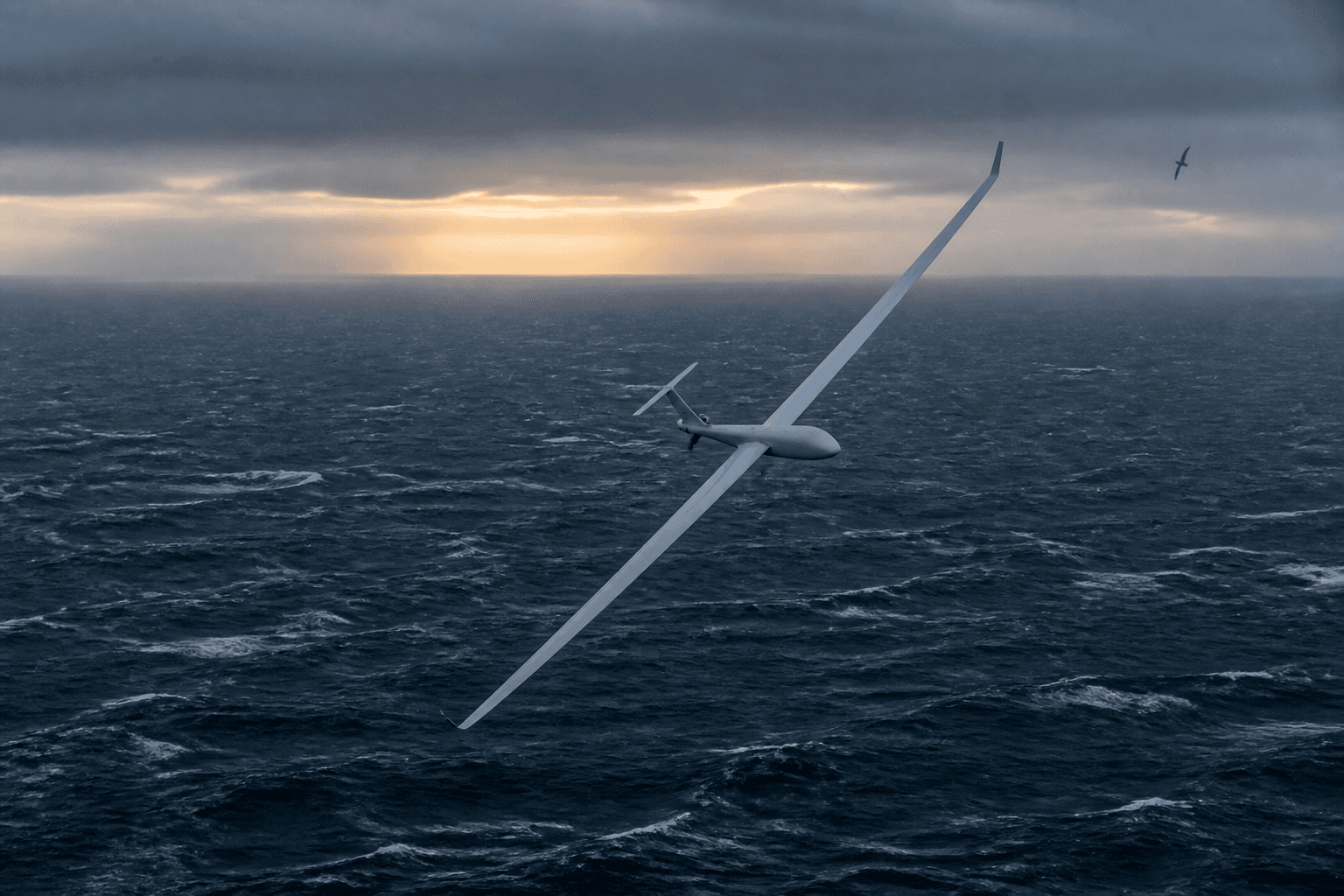
The Bengaluru company says it is building autonomous aircraft that harvest energy from wind using dynamic soaring, the flight technique albatrosses use to move between air layers with different speeds. TechCrunch reports that Lachy Groom led the pre-seed round, with Together Fund participating. Founder Samay Sanghvi is aiming at long-duration ocean surveillance and communications missions.
The physics is real. Dynamic soaring lets an aircraft gain energy by repeatedly crossing a wind-speed gradient, particularly above the ocean. The engineering challenge is brutal. An autonomous vehicle has to measure the air mass, fly the correct path, preserve control margins, manage weather, and keep its sensors and actuators alive over a duration that makes ordinary drone maintenance schedules look luxurious.
Alteon's public ambition is roughly 417 days aloft. That number should not be mistaken for demonstrated endurance. Reporting on the company says its immediate technical milestone is an energy-neutral dynamic-soaring cycle, meaning the aircraft harvests enough energy through the maneuver to offset what it consumes. Until that works repeatedly outside a controlled demonstration, the year-long mission remains a thesis.
If the thesis survives, the category matters. Satellites provide enormous coverage but are constrained by orbit, revisit time, launch cost, and sensor distance. Ships and crewed aircraft can stay closer to the problem, but they are expensive and labor-intensive. A persistent unmanned aircraft could occupy the middle layer, watching shipping lanes, weather, fisheries, and remote infrastructure for a fraction of the operating cost.
This is the right kind of ambition because the proof can be staged. Demonstrate one energy-neutral cycle. Then one day. Then one week through ugly weather. Category creation is not declaring the final number. It is building a sequence of evidence that makes the number stop sounding insane.
LaunchPad positionPersistent aviation could create a cheaper sensing layer between satellites and crewed patrol aircraft, but the business only becomes credible after the aircraft proves autonomous energy harvesting, control reliability, and survivability in real weather.
This report draws on the linked primary sources and reputable reporting. Company statements are treated as claims until independently demonstrated.