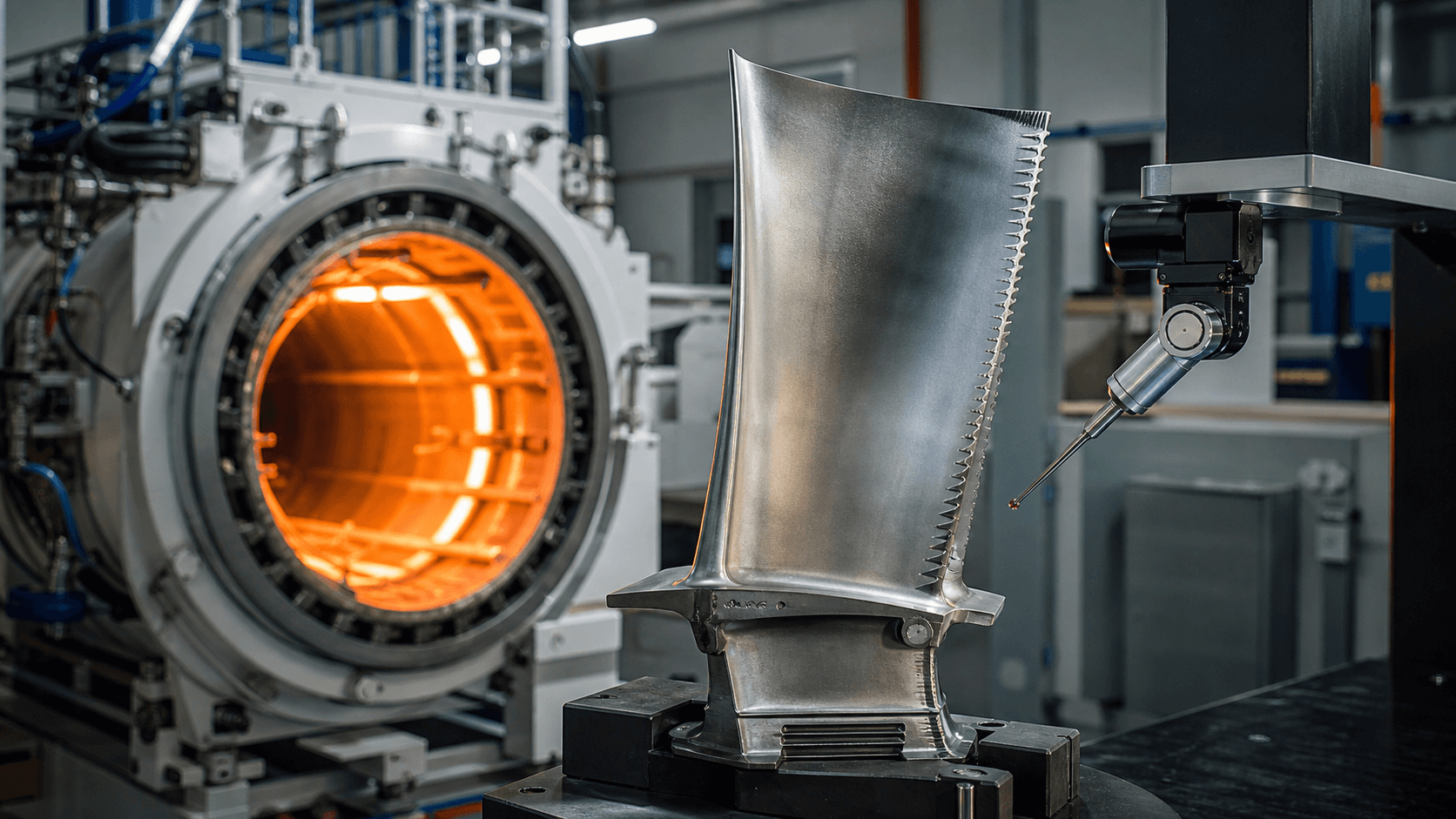
The AI power race has reached a piece of hardware most software companies never expected to understand: the single-crystal turbine blade. TechCrunch reports that SpaceX is preparing a foundry near Bastrop, Texas, based on job listings and land records. Elon Musk says turbine blades and vanes are the limiting components for new gas generation and claims in-house casting could bring turbines online as much as 18 months faster.
Treat that carefully. Musk described a plan, not operating capacity. He also said SpaceX and Tesla are each building toward 100 gigawatts per year of solar manufacturing while using gas to supplement and bootstrap generation. None of those forward-looking statements should be confused with a finished plant, a verified production rate, or power already serving data centers.
The manufacturing logic is still real. High-temperature turbine parts are difficult to cast, coat, inspect, and qualify. If blade supply is the long pole, owning more of that process can compress procurement and iteration. It also moves the bottleneck from a vendor queue into SpaceX's own factory, where execution risk becomes internal and capital intensity gets much higher.
There is another bill. A commissioned study from the Piedmont Environmental Council modeled a different proposed data center in Virginia with eight gas turbines and 51 diesel generators. Using permitted emissions, the study estimated $53 million to $99 million in annual health damages and 3.4 to 6.5 premature deaths per year. Those are modeled estimates from an advocacy-funded study, not measurements from a SpaceX site, but they show the externalities that arrive when generation moves behind the meter.
This is where the compute boom stops being an abstract demand curve. Faster models require chips, chips require power, and power can require metallurgical capability plus a political license to emit. The companies that integrate the chain may move faster. They also inherit responsibility for every link. Building the turbine blade is leverage. Pretending its consequences belong to somebody else is not.
LaunchPad positionThis is a stated manufacturing strategy, not completed power capacity. It shows AI infrastructure moving deeper into specialized heavy industry, where production lead times and local emissions become part of the compute roadmap.
This report draws on the linked primary sources and reputable reporting. Company statements are treated as claims until independently demonstrated.