Modern fertilizer is a miracle wrapped inside an expensive industrial habit. We manufacture reactive nitrogen using enormous plants, natural gas, pressure, heat, shipping, and a distribution chain, then spread it across fields where a large share never reaches the crop.
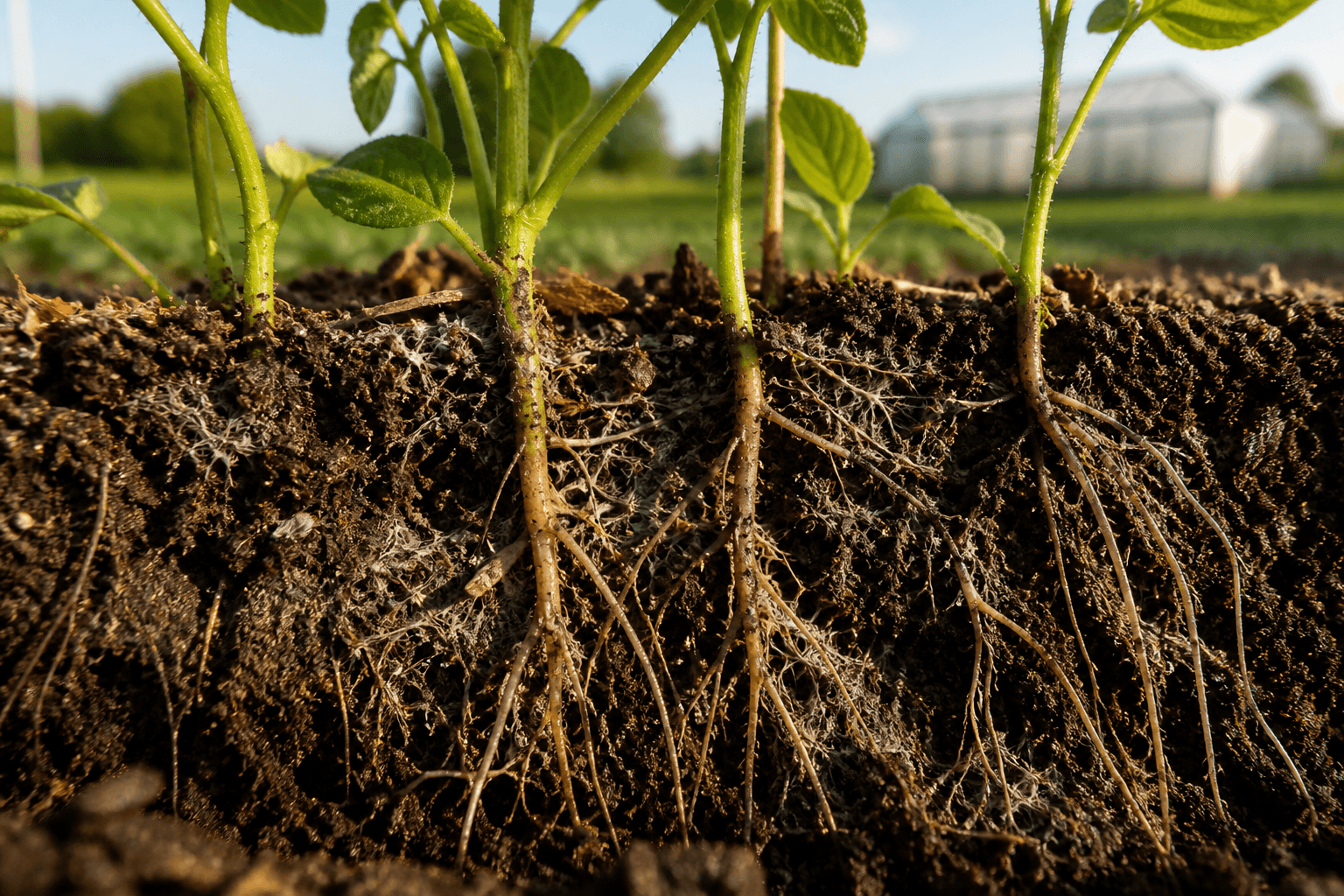
Switch Bioworks is trying to collapse that system onto the root. The California startup engineers naturally occurring microbes, dries them into a shelf-stable powder, and rehydrates them at planting. Once the organisms establish alongside the crop, a genetic switch turns on ammonia production near the plant.
That sequence matters. Microbes that produce fertilizer immediately can spend too much energy on output before they build a stable population. Microbes that colonize well but produce too little nitrogen are scientifically interesting and commercially useless. Switch's mechanism is designed to separate those phases: establish first, manufacture second.
The company has begun advanced field trials in corn after receiving regulatory authorization for environmental testing. MIT Technology Review reports that early greenhouse work showed the engineered microbes colonizing roots and producing ammonia, but the outdoor trials now have to answer the questions that kill agricultural biotechnology: uneven soil, competition from native organisms, weather, storage, application errors, and yield variation across real farms.
The economic prize is larger than a cleaner bag of fertilizer. If microbes can make meaningful nitrogen at the point of use, farmers could reduce exposure to fossil-fuel prices and long supply chains while limiting runoff. The company says conventional nitrogen fertilizer consumes roughly two percent of global energy. Its own product has not yet proven that it can replace a meaningful share at commercial scale.
This is where deep technology earns the name. The genetic circuit is only one layer. Formulation, shelf life, field application, regulatory evidence, farmer economics, and manufacturing consistency all have to work together. The root is the factory floor, but the company still has to prove it can run production outside the lab.
LaunchPad positionThe company's genetic switch attacks the core tradeoff in microbial fertilizer: organisms need to conserve energy long enough to establish on roots, then produce enough ammonia to matter. Farm-scale consistency is the real product test.
This report draws on the linked primary sources and reputable reporting. Company statements are treated as claims until independently demonstrated.