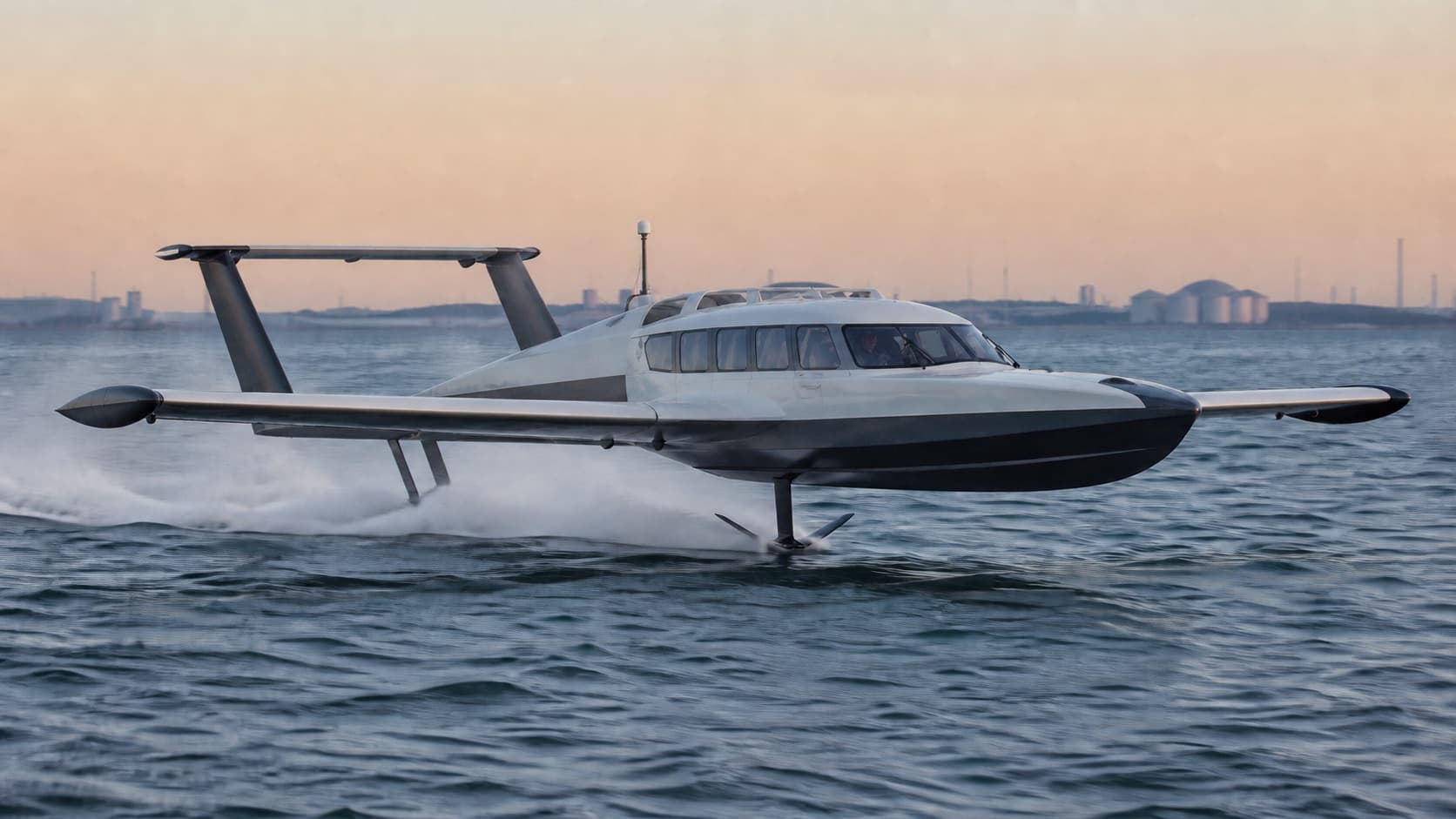
REGENT Craft reportedly raised around $120 million in Series B equity and secured roughly the same amount in debt financing. The company is building seagliders: electric wing-in-ground-effect craft designed to hydrofoil out of harbors, accelerate, and fly close above the water for regional routes.
That description sounds like somebody lost a boat, an airplane, and a venture deck in the same blender. The useful question is not whether the object feels futuristic. It is whether the operating system around it can become painfully real.
REGENT says it has more than $10 billion in commercial orders and $15 million in U.S. Marine Corps contracts. Orders are not recognized revenue, and ambitious vehicle programs have a long history of announcing demand years before proving economical production. But defense gives the company a second path: contested logistics, surveillance, medical evacuation, and autonomous maritime operations can support capabilities that commercial ferry economics may not finance alone.
The manufacturing commitment matters. REGENT is bringing a 255,000-square-foot facility online in Rhode Island and says it expects to scale employment substantially. New vehicle categories die less often from a missing idea than from the ugly middle: certification, suppliers, training, maintenance, tooling, and enough working capital to make iteration possible.
Debt in the financing mix is therefore both validation and pressure. It can extend the runway for physical infrastructure, but it also turns schedule slips into financial events. Hardware does not care about the narrative when payments come due.
The company now needs to prove three things in sequence: the craft works reliably, the factory can repeat it, and customers convert headline order books into cash. Nail those and REGENT is not building a weird aircraft. It is defining a category. Miss them and the ocean gets another beautiful prototype.
LaunchPad positionThe seaglider is not interesting because it sits between a boat and an airplane. It is interesting because REGENT is assembling the contracts, factory, financing, and mission set required to make a new vehicle category survive.
This report draws on the linked primary sources and reputable reporting. Company statements are treated as claims until independently demonstrated.