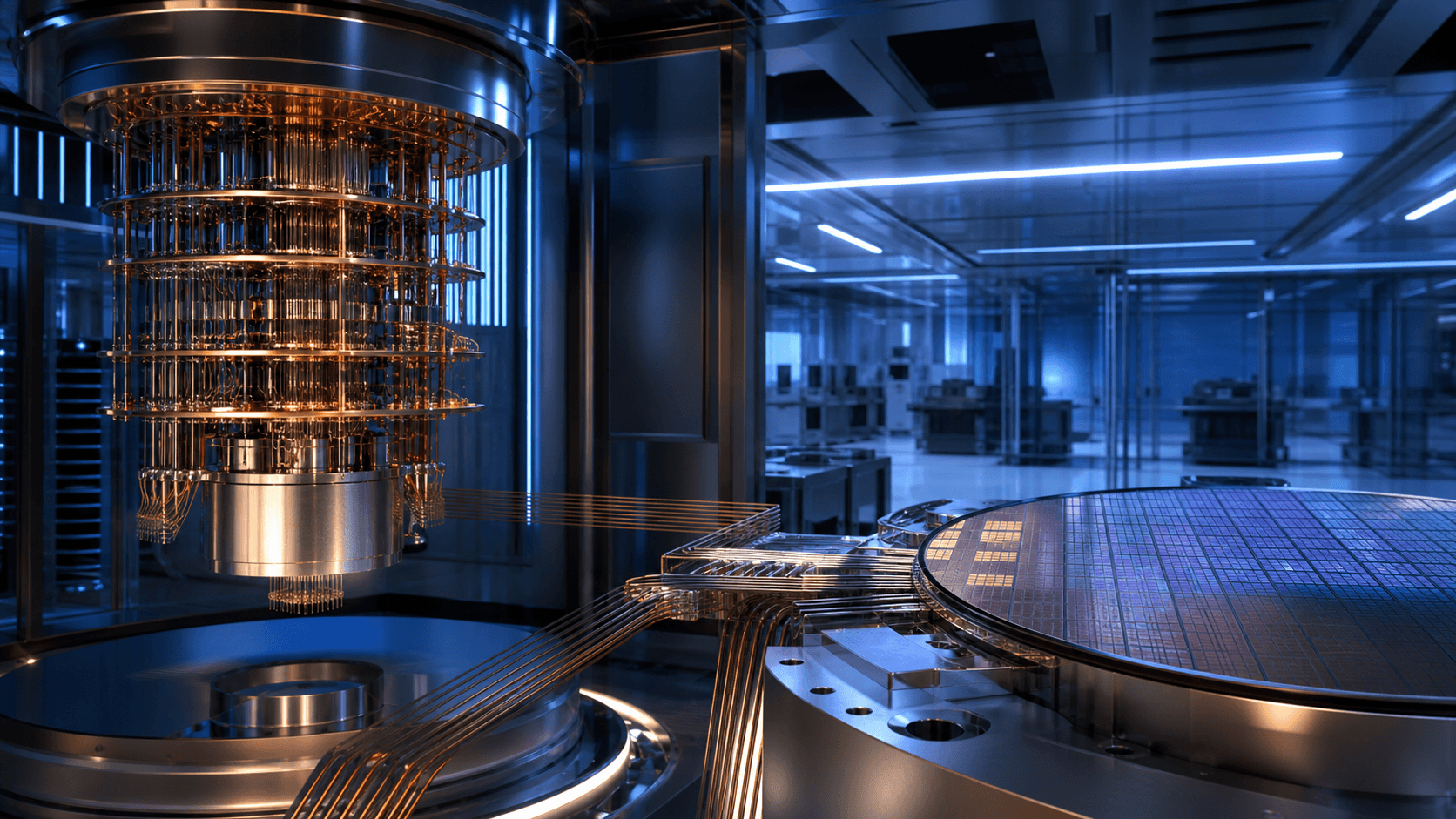
Quantum computing still has too many unsolved engineering problems for religious loyalty to one hardware architecture. IBM appears to understand that. It has completed its acquisition of HRL Laboratories, buying a second technical path instead of pretending the first one has already won.
IBM announced the close on August 26. The price was not disclosed. HRL was previously owned by Boeing and General Motors, which IBM says will remain strategic partners. The laboratory brings work in silicon-spin qubits, quantum sensing, cryogenic control electronics, materials, packaging, and interconnects.
That portfolio sits beside IBM's established superconducting program. Superconducting qubits can be controlled quickly and have attracted a large software and research ecosystem. Silicon-spin approaches offer a different manufacturing thesis, one that may eventually benefit from semiconductor tooling and dense integration. Neither route has proved it can deliver useful fault-tolerant computing at commercial scale.
The acquisition therefore reads less like a victory lap and more like a rational hedge. Quantum systems are not only qubits. They are fabrication yield, calibration, control, cooling, packaging, error correction, and the brutal work of connecting the whole stack without destroying fidelity. HRL gives IBM more of that stack under one roof.
IBM continues to publish ambitious roadmaps, including targets for large fault-tolerant systems. Those dates remain targets. The real scorecard is whether HRL's devices and packaging measurably improve error rates, manufacturability, or scaling economics. Buying optionality is smart. Converting it into a machine customers can use is the part that counts.
LaunchPad positionThe transaction buys IBM optionality across quantum modalities. The missing proof remains economics, device performance, and whether the new architecture accelerates useful fault-tolerant systems.
This report draws on the linked primary sources and reputable reporting. Company statements are treated as claims until independently demonstrated.