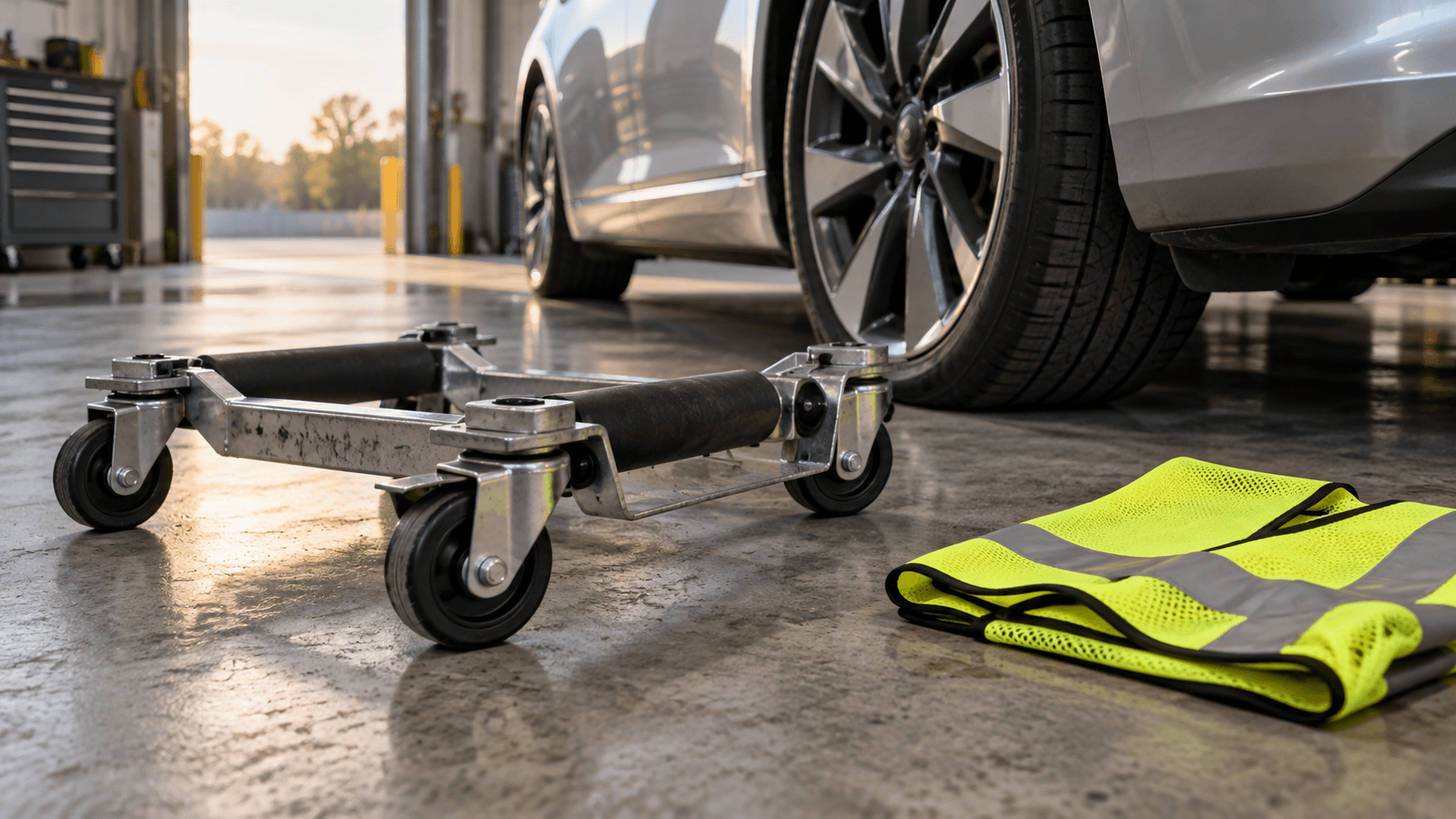
A robotaxi that stops driving has not necessarily stopped creating work. Someone still has to answer the emergency call, understand where the vehicle is, decide how it can be moved and get a qualified person to it when remote help is insufficient. California's newly signed Senate Bill 1246 addresses that operating layer. The significant question for fleet builders is not simply whether their vehicle can complete a trip without a driver. It is who owns the unfinished job when it cannot.
Governor Gavin Newsom approved the bill on September 30. Its new operational provisions become operative July 1, 2028, so this is not an announcement that the new penalties are already being imposed. TechCrunch independently reported the signing on October 1. The chaptered text, rather than an earlier draft or a simplified headline, establishes what the law actually requires. The distinction matters in this case because remote human involvement covers several different jobs.
Senator Dave Cortese's signing announcement puts the policy in practical terms: local incident support, notification to affected jurisdictions during system-wide failures, and more reporting about company responses. It identifies SEIU California as the sponsor and lists support from firefighter, highway-patrol, police and local-government organizations. That is a particular public-service and labor perspective, not a neutral evaluation of every operator's technology. Its underlying objection is nevertheless straightforward: emergency personnel should not become the default recovery workforce for a commercial fleet.
The penalty mechanism is more precise than a general fine for getting stuck. A city attorney or county counsel may bring a civil action. A court may impose up to $5,000 for each violation of the dispatch-and-notification section, and up to $10,000 per commercial autonomous vehicle for specified emergency interference lasting more than 30 minutes after an official requests a local incident technician. The court weighs circumstances. This is neither an automatic ticket nor permission to obstruct responders for half an hour.
Dispatch, arrival and clearance are different events. DMV must establish reasonable technician-arrival guidelines by July 1, 2028; the statute does not establish a universal 30-minute arrival guarantee. From an operations perspective, recording only that somebody was sent would miss how long the street remained obstructed. A useful incident timeline should distinguish the initial request, assignment, departure, arrival and restoration of access. That is our recommended measurement approach, not a claim that the law specifies each of those timestamps.
California is adding to an existing system, not starting from an unregulated road. DMV's earlier explanation of Assembly Bill 1777 identified first-responder interaction requirements beginning July 1, 2026, including two-way vehicle communications. It also described a mechanism for notices of autonomous-vehicle noncompliance, contingent on the necessary regulations. The historical point is important: a communication channel and a recovery capability are related, but one does not automatically deliver the other. Getting through to the company is the beginning of an incident response.
The federal safety regulator has already stated why this deserves attention. In its July 8 letter to automated-driving developers, NHTSA said it had documented a pattern of vehicles entering active emergency scenes, blocking ambulances or firefighters, and failing to respond appropriately to conditions such as flashing lights, flares, smoke and cones. The agency characterized the problem as a functional insufficiency and called for developers to prioritize it. That letter is a primary record of the regulator's concern, not a new California penalty or a completed finding against every company.
NHTSA also acknowledged the potential for automated vehicles to reduce human error. Those positions are compatible. A system can offer valuable capabilities and still need stronger handling of situations that affect people outside its passenger compartment. Our reading is that emergency interaction should be evaluated as a service requirement in its own right. An argument about aggregate driving performance cannot, on its own, answer whether an ambulance can get past a disabled vehicle at a particular moment.
Remote driving is not synonymous with remote assistance. The final law distinguishes direct, real-time driving actions from advice or revised tasks supplied to the automated system. Its U.S.-location and licensing requirement specifically addresses remote drivers, whose licenses must be valid for driving in California with the appropriate class and endorsements. That narrower wording should not be expanded into a claim that every overseas support role has been banned. Operators still need to evaluate their actual functions against the final provisions.
Waymo's February explanation illustrates why the distinction is technical as well as legal. The company says its remote-assistance personnel respond to requests from the automated driving system and provide information that the system can accept or reject. It says they do not remotely drive the cars. Its U.S.-based Event Response Team handles more complex work, including coordination with emergency responders and post-collision protocols. Those are Waymo's descriptions of its organization, not an independent observation of every intervention.
The engineering consequence is that sending advice does not guarantee motion. If the onboard system retains the driving decision, useful context may help it proceed, but the presence of a human on the connection is not equivalent to a person taking the wheel. That makes role definitions essential to an emergency plan. A dispatcher needs to know whether the person answering can supply information, authorize a particular action or arrange physical recovery, without having to infer those powers from the generic title of operator.
Waymo's passenger-support documentation describes the physical fallback separately. If a stopped vehicle cannot continue on its own, Support sends roadside assistance and remains in contact. The guidance describes a specialist reaching the vehicle, entering the driver's seat and completing the trip. It also tells riders not to take over the controls themselves. This is an account of the company's stated process for the relevant vehicles, not evidence that every intervention follows the same timeline or that every vehicle design has identical controls.
That documentation is useful precisely because it exposes work that a driverless label can conceal. There is a customer-support conversation, a decision about whether autonomous continuation is possible, a dispatch and a person who reaches the vehicle. A fleet's recovery design should budget for the whole sequence. Counting available support staff without mapping their authority and location would not tell a city whether a particular obstruction can be cleared. Nor would measuring connection latency alone reveal how long physical assistance takes to arrive.
Public-facing training is another part of that sequence. Waymo publishes first-responder resources for the Jaguar I-PACE, Ojai and Hyundai IONIQ 5, along with California-specific interaction material, and offers training where it operates. The existence of different guides makes an important practical point: emergency interaction is partly a hardware and procedural problem. A responder's knowledge of one vehicle does not itself establish knowledge of another. Publishing a guide is useful, but it is not proof that every agency has received or practiced it.
For deployment planning, we would treat a change in vehicle configuration as a reason to review the recovery workflow, not just the rider experience. The questions include who can identify the correct procedure, how the company communicates the vehicle's state and which personnel can perform the next action. Exercises should test the handoff between public responders and the company, including a situation in which the first attempted remedy does not work. That is a proposed verification method, not a report of an undisclosed operator test.
There is also evidence of work beyond public guides. In November 2025, Waymo said TÜV SÜD had audited its safety-case and remote-assistance programs. The company described review of policies and implementation, interviews and an operational site visit. A safety case organizes a company's safety claims and the evidence supporting them. The announcement is Waymo's account of an independent audit; it is not the full auditor report, a guarantee of error-free service or a certification of compliance with this newly signed law.
That distinction leaves room for both useful assurance and continued scrutiny. A review of processes can identify whether responsibilities, training and evidence are organized coherently. Incident records address a different question: what happened when the system was actually needed? Neither should be used to erase the other. A credible evaluation would connect the documented process to observed response outcomes, investigate departures and show how corrective changes were checked, rather than treating an audit badge or an isolated video as the entire safety argument.
The economic implication is local. Our analysis is that recovery readiness belongs in the cost and geography of deployment, because a remote organization cannot make travel time disappear. A dense cluster of vehicles and a wide service area create different coverage problems. Simultaneous incidents are especially important to test: an arrangement adequate for one disabled car might not provide the same response when several need help together. This is a capacity-planning scenario, not a prediction of a particular company's failure rate or staffing bill.
The law's arrival-guideline process leaves implementation work ahead. Builders should follow that process and the final statutory text rather than treating this report as a compliance checklist. Cities, meanwhile, have a reason to distinguish promises from usable operational evidence. The worthwhile outcome is not simply that a penalty can be pursued afterward. It is that the company can demonstrate a recovery system before its vehicles become someone else's emergency workload. Driverless service still needs people, authority and equipment in the right places.
LaunchPad positionPlan and measure physical recovery alongside autonomous driving, and keep remote assistance, remote driving and local incident work distinct.
This report draws on the linked primary sources and reputable reporting. Company statements are treated as claims until independently demonstrated.