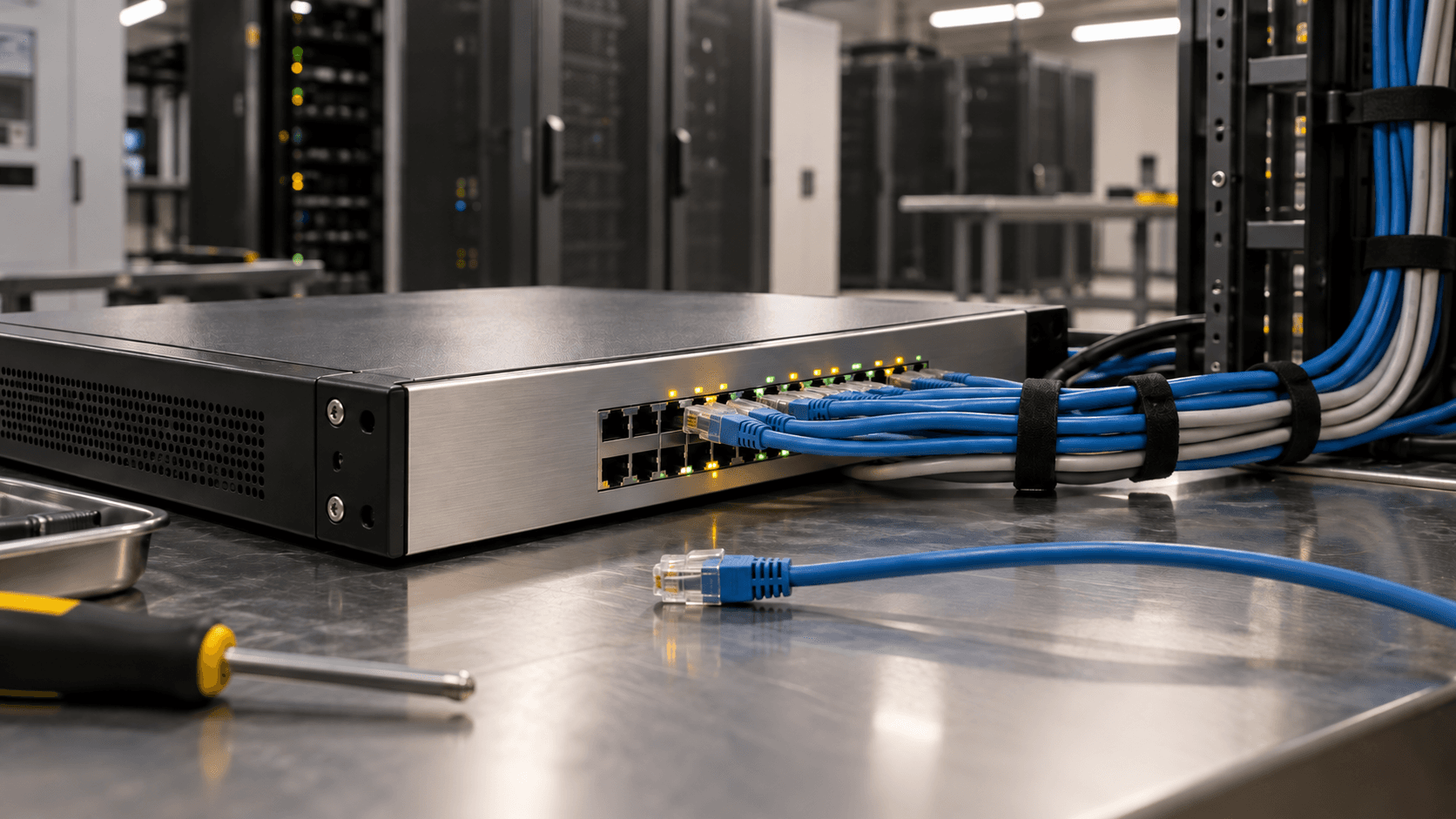
The NetScaler emergency changed while administrators were trying to understand it. Early warnings described exploited vulnerabilities without a public fix. By September 27, Citrix had published an advisory and named updated builds. Anyone still working from the first screenshot of the story risks making the wrong decision. The immediate job is now more specific: identify affected appliances, preserve the evidence needed to investigate, and apply the vendor's current remediation without confusing restored service with a clean environment.
CISA says threat intelligence and reports confirm active exploitation globally of CVE-2026-88771 and CVE-2026-88772. Each can independently enable remote code execution. They are part of an eight-vulnerability disclosure, but the public confirmation of exploitation concerns those two, not all eight. CISA also warns that updates can remove forensic visibility and encourages checking for signs of compromise before patching when possible. This is a live vulnerability response, not a theoretical discussion about whether an edge appliance might attract attention.
The wording matters because urgency and certainty are different things. Active exploitation is sufficient reason to accelerate an exposure review. It does not establish that every vulnerable organization has been breached, identify an attacker inside a particular network or prove that data has been stolen. A responsible status report should distinguish confirmed exposure, suspected compromise and confirmed compromise. Those labels lead to different work, and collapsing them into one red dashboard does not make the response faster.
Citrix's bulletin identifies an important asymmetry. CVE-2026-88771 permits unauthenticated command execution through improper input validation and needs no additional feature enabled. CVE-2026-88772 is a memory-overflow issue that can cause remote code execution or denial of service when DTLS is enabled. DTLS is enabled by default on VPN virtual servers. Disabling that feature is therefore not a complete answer to the disclosure: it does not remove the first vulnerability's stated precondition.
For the standard appliance branches, Citrix lists 14.1-73.37 and 13.1-64.23 as fixed builds. The corresponding FIPS release is 14.1-73.37 FIPS; the 13.1-FIPS and 13.1-NDcPP branches require 13.1-37.279 or later. These are branch-specific instructions, not permission to substitute whichever version number looks largest. The bulletin covers customer-managed deployments, including NetScaler instances used by Secure Private Access Hybrid. Citrix says it updates its managed cloud services itself. Administrators should verify the current bulletin before selecting their release package.
That ownership boundary deserves an actual answer from the service provider. A product being hosted somewhere else does not, by itself, tell the customer who upgrades the appliance. I would ask for the affected instance list, the running build on each instance, the party responsible for the change and the evidence that the change completed. This is a proposed operational checklist, not an assertion that a particular hosting company has failed. It prevents a customer and supplier from both assuming the other owns the same job.
Tenable's updated FAQ confirms that patches became available on September 27 and distinguishes these flaws from the previously disclosed CVE-2026-19489 and CVE-2026-19490. Its change log is especially useful because search excerpts and older paragraphs can lag a developing disclosure. The current FAQ also says the extent of exploitation has not been quantified publicly. The defensible message is that attacks are confirmed and fixes exist, not that every report of an earlier NetScaler problem describes this event.
CISA's machine-readable Known Exploited Vulnerabilities catalog adds another layer of precision. Both new entries were added September 27, carry a September 30 due date and are marked for forensic triage. Their ransomware-use field is unknown. Unknown is not evidence of no ransomware activity, and it is not permission to announce a ransomware campaign. The records direct readers to the vendor and CISA's risk-based guidance. They are a prioritization input with explicit fields, not a substitute for investigating an individual appliance.
The companion CISA announcement says the binding directive applies to Federal Civilian Executive Branch agencies and encourages other organizations to adopt risk-based vulnerability management. A private company should not turn the catalog date into a universal legal deadline, nor interpret it as a safe waiting period. Its own exposure, service dependencies and response obligations need review by the appropriate owners. The technically urgent question is what remains reachable and vulnerable now, not how long a calendar entry can be used to postpone a decision.
The most difficult part of that decision is preserving evidence while reducing exposure. CISA's implementation guidance starts with scoping and an out-of-band communication channel, then prioritizes volatile data and an evidence collection log before alterations when possible. It coordinates patching, stabilization and containment rather than treating them as unrelated tickets. Later analysis looks for unauthorized access, lateral movement, persistence and data movement before deciding whether to escalate. The guidance explicitly labels its hourly target timelines as recommendations, not separate mandatory deadlines.
For a small organization, this does not mean an administrator should improvise a forensic investigation alone while leaving a vulnerable system exposed indefinitely. It means bringing the incident-response lead and network owner into the same decision, documenting what can be preserved promptly and recording any unavoidable tradeoff. Service continuity and evidence preservation both deserve an owner. If the business cannot tolerate an interruption, somebody with authority needs to accept the response plan, including the uncertainty that remains. Silence is not a continuity strategy.
Citrix's suspected-compromise guide provides concrete collection distinctions. A virtual VPX instance can be snapshotted; local and remote logs, time settings and a support bundle can assist later review. The guide warns that its Packet Engine core-capture procedure causes a warm restart and disconnects SSH sessions. Hardware imaging is work for the incident-response process. Those details are why a well-intentioned collection attempt should be coordinated with the people responsible for availability, rather than copied into production during a hurried chat conversation.
Tenable describes generic compromise indicators through NetScaler Console, identifying Console version 14.1-73.36 or later with telemetry enabled, and says customers can request indicators from Citrix Support. That Console number is not the fixed appliance build. The FAQ also cautions that indicators may not cover every attacker technique and recommends forensic expertise for a comprehensive assessment. A clean result from a particular check should be reported as exactly that: the check did not find its indicators in the available evidence.
That last qualification is operationally important. Before closing an investigation, the response team should document which evidence existed, which checks ran and which time period they covered. If relevant logs were missing, the honest result is reduced visibility, not a stronger claim of safety. I would want that limitation attached to the recovery decision so a later shift does not inherit a reassuring status with all its conditions removed. This is about preserving the meaning of the finding, not generating more paperwork.
The disclosure also includes a configuration-specific action for CVE-2026-88778, a TCP initial sequence number prediction issue. Citrix directs affected deployments to its enhanced ISN setting. The linked product documentation says this increases variation in the starting sequence numbers for TCP connections where NetScaler acts as the server and is disabled by default. That makes configuration verification a separate completion item alongside the firmware check. The cited documentation does not establish that applying a release alone enables the setting.
From a change-management perspective, this is where a single checkbox becomes misleading. A useful record should identify the appliance branch, the installed build, applicable configuration actions and the post-change service checks. For redundant deployments, I would require evidence for each member instead of assuming that one successful upgrade represents the pair. Recovery planning should also avoid silently returning a vulnerable image to service. These are recommended verification practices, not reports of a particular customer's rollout or guarantees about how an upgrade will behave.
If compromise is suspected, Citrix's guidance goes beyond installing firmware. It calls for isolation, changing affected credentials and secrets on their respective systems, revoking relevant certificates, examining connected systems and rebuilding or replacing the appliance as appropriate. It recommends upgrading before restoring a known-good backup that predates the compromise, then rotating restored secrets. The implication is direct: a repair to the vulnerable software does not itself answer questions about access an intruder may already have obtained.
That creates a coordination problem larger than the network team. An appliance recovery may require decisions from identity administrators, application owners and the people responsible for certificates or service accounts. The response lead should keep those dependencies visible and separate completed work from work merely requested. Otherwise, an appliance can return to service while the organization has lost track of the credentials and trust relationships it intended to repair. Treat this as a proposed recovery discipline, not a claim that such persistence has been demonstrated in every exploitation of these flaws.
The business test after remediation should be specific to the services the organization actually runs. Ask whether authorized users can reach the required applications, whether administrative access follows the approved path and whether expected logging reaches the monitoring team. Pair that functional evidence with the technical remediation record and the investigation's remaining limitations. A working login is valuable evidence about availability. It is not the same evidence as an updated build, a reviewed configuration or a completed compromise assessment.
The useful executive update tonight is short enough to survive a handoff: here are the affected assets, here is what has been fixed, here is the evidence preserved, and here is what remains unknown. The public record now supports action on named vulnerabilities with named remedies. It does not support attribution theater or a declaration that installing a patch erases the past. Get the current instructions in front of the right operators, resolve ownership and make the recovery claim only as strong as the evidence behind it.
LaunchPad positionVerify the correct appliance build and applicable configuration changes while coordinating evidence preservation. Separate restored availability from confidence that compromise has been investigated.
This report draws on the linked primary sources and reputable reporting. Company statements are treated as claims until independently demonstrated.