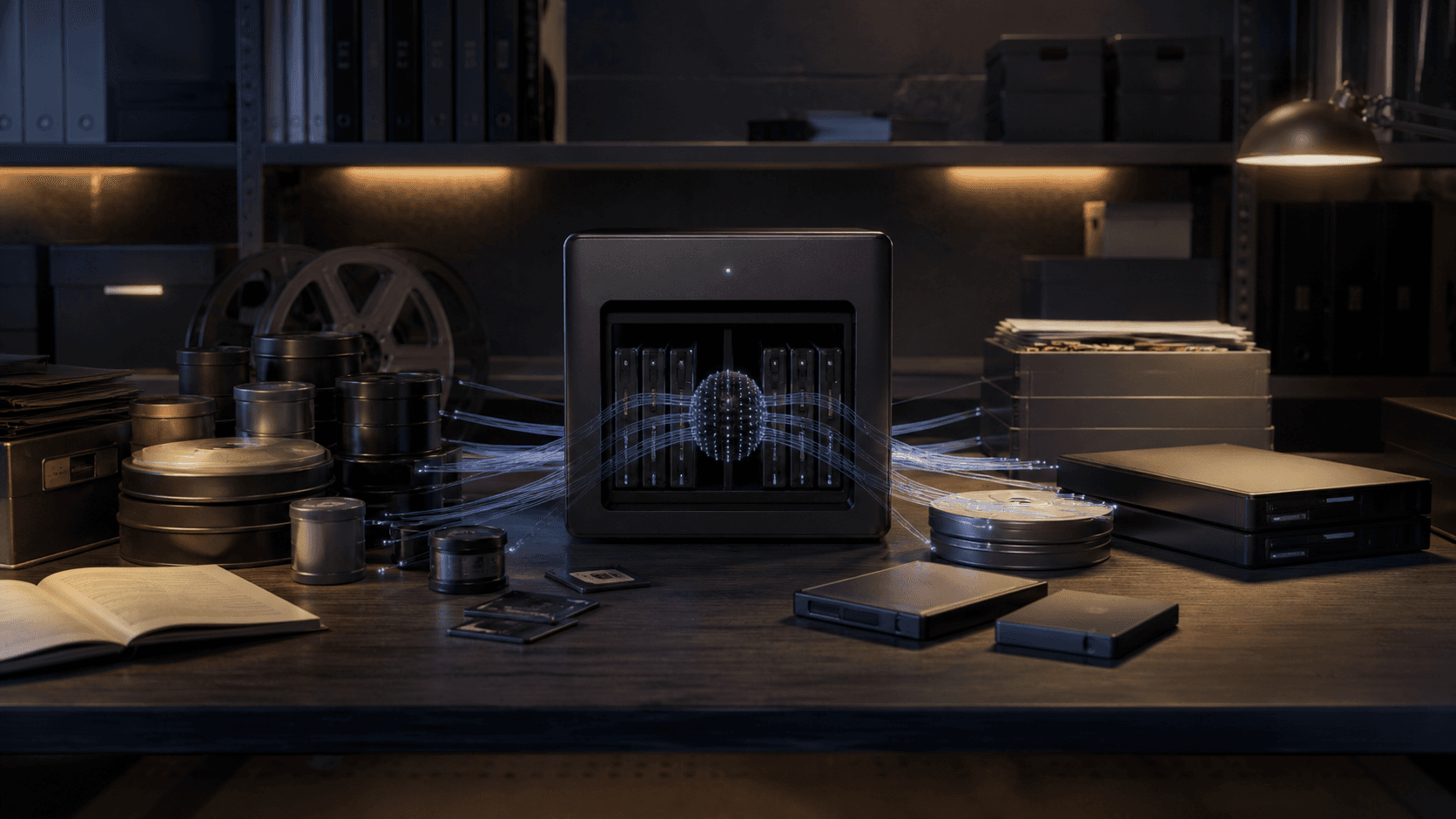
Most personal AI assistants have a memory problem hiding in plain sight. The useful context already exists on the user's machine, buried inside recordings, videos, images, meetings, and documents that nobody can search without remembering where the hell they put them.
Clipto raised $15 million in an all-equity round at a $250 million post-money valuation, according to TechCrunch. The three-year-old company indexes local media and files so users can search by description. It can also expose selected information to AI tools through the Model Context Protocol, turning an archive into a permissioned source an agent can query.
Founder Henry Kang told the publication that access requires an active user request and authorization, while processing runs locally. That architecture matters. An agent that can search years of private media is useful precisely because the material is sensitive. Local execution and scoped access are not privacy garnish. They are the product boundary.
Clipto says it has more than 30 million users, hundreds of thousands of paying customers, roughly $15 million in annual recurring revenue at the beginning of 2026, and profitability with a team of about 20. Those are company figures and were not independently verified. Kang declined to provide an exact subscriber count or average revenue per user, which leaves the economics less transparent than the headline valuation.
The category risk is obvious. Apple, Google, Adobe, and every operating-system vendor can build native media search. Clipto's defense cannot be a clever search box. It has to become the trusted memory layer across tools, file types, and agents before platforms turn the capability into a checkbox. The funding buys time to prove that independent layer deserves to exist.
LaunchPad positionLocal search becomes strategically interesting when it stops being a better file finder and becomes controlled memory for agents. The risk is that operating-system vendors can absorb the feature before the startup owns the category.
This report draws on the linked primary sources and reputable reporting. Company statements are treated as claims until independently demonstrated.